
About
Videos News Careers Contact Providers Investors Explore Felix
Fasikl Blog

Neuro-AI & Therapeutic Insights

Latest news, clinical updates, and technical articles on bioelectronic technology and essential tremor solutions.

0%

Choosing among the 2026 top Neuro AI healthcare platforms requires more than comparing feature lists. Buyers must examine clinical value, deployment readiness, evidence quality, and long-term accountability. A Neuro-AI Healthcare Platform may support stroke detection, brain imaging analysis, neurological monitoring, or personalized care planning. Yet impressive demonstrations can hide practical weaknesses. The real test begins in everyday workflows.

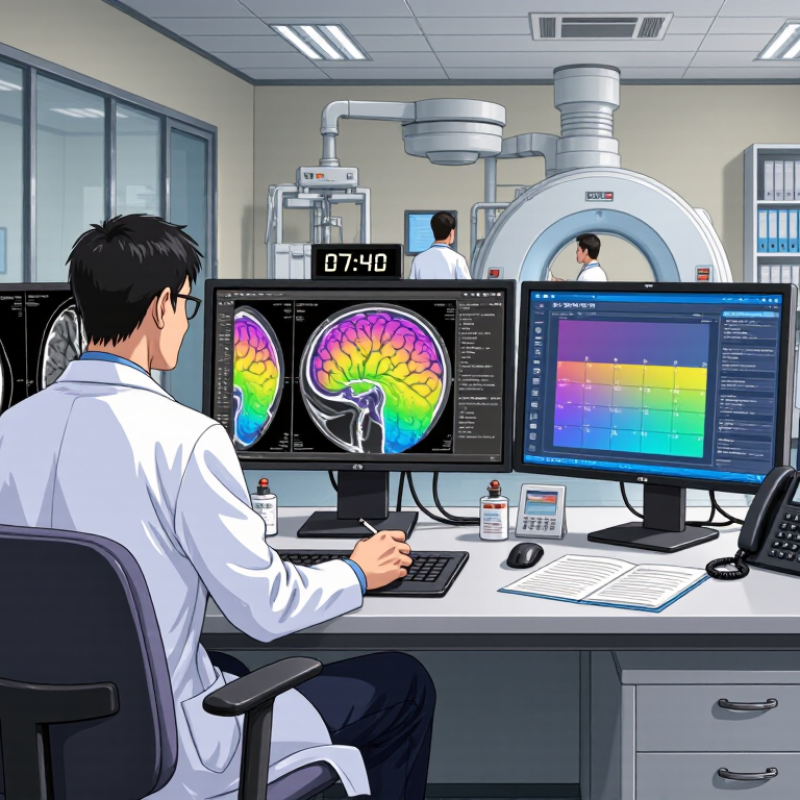
Consider a radiologist reviewing an MRI at 7:40 a.m., with several urgent cases waiting. Does the platform return understandable results quickly? Can clinicians view confidence scores, supporting images, and previous findings? Strong platforms should connect with existing EHR, PACS, and hospital identity systems without creating another isolated dashboard. They should also provide audit trails, role-based access, clear validation records, and reliable technical support. Small details matter. A delayed alert can disrupt care.

Buyers should assess peer-reviewed research, real-world implementation data, cybersecurity controls, and regulatory status in relevant markets. Vendor claims deserve careful questions, especially when accuracy figures come from narrow datasets. Independent validation is more persuasive than polished sales language. Cost also extends beyond licensing. Training, integration, monitoring, upgrades, and staff adoption shape the true investment.

No platform is perfect. Even a well-tested system may perform differently across hospitals, scanners, languages, and patient populations. That limitation should remain visible. This guide compares leading options through a practical buyer’s lens, balancing innovation with clinical responsibility. The aim is not to reward the loudest promise. It is to identify tools that clinicians can understand, organizations can govern, and patients can trust.
2026 Top Neuro AI Healthcare Platforms for Buyers

Neuro AI Healthcare Platforms: Definition, Scope, and Core Functions

Neuro AI healthcare platforms are digital systems that apply artificial intelligence to neurological care. They process signals from brain imaging, electroencephalography, clinical notes, and patient monitoring devices. Their scope covers screening, diagnosis support, treatment planning, rehabilitation, research, and long-term follow-up. In practice, these platforms connect complex neurological data with clinical workflows. The goal is not to replace medical judgment. It is to make relevant evidence easier to review.

Core functions usually include data integration, pattern detection, risk assessment, documentation, and outcome tracking. A platform may flag unusual imaging patterns or identify changes in seizure activity. It can also compare patient data across visits and support personalized care plans. For research and operations, it may organize datasets and measure treatment responses. Reliable systems show how outputs were produced. They record data sources, model versions, confidence levels, and user decisions. Still, automation can mislead.

Buyers should examine clinical evidence, validation methods, and real-world performance across diverse patient groups. Clinical studies should describe limitations, not only positive results. Data protection requires access controls, encryption, retention rules, and clear patient consent procedures. Interoperability matters because neurological care often spans hospitals, laboratories, and home devices. A useful pilot might test alert accuracy, review time, and clinician workload over several months. Human review remains essential. No platform is flawless. A polished dashboard can look more certain than the underlying evidence. Teams should question false positives, missing data, and uneven performance before wider adoption. That doubt improves accountability.

2026 Top Neuro AI Healthcare Platforms for Buyers

Neuro AI Healthcare Platforms: Definition, Scope, and Core Functions

Neuro AI healthcare platforms combine clinical data integration, neurological image and signal analysis, predictive modeling, workflow support, and monitoring capabilities. The chart shows the estimated global population affected by major neurological conditions, helping buyers assess the clinical scope and potential use cases of these platforms. Values are rounded global estimates in millions and are shown on a logarithmic scale for readability.

Sources: World Health Organization neurological disorders and epilepsy fact sheets; WHO dementia estimates; Global Burden of Disease Study 2021 findings published in The Lancet Neurology. Figures are rounded estimates and are not company or platform performance data.

Key Technologies Behind Neuro AI Healthcare Platforms

Neuro AI healthcare platforms in 2026 increasingly combine brain imaging, EEG signals, clinical notes, and wearable data. Multimodal models can detect patterns that one data source may miss. However, reliable performance depends on clean timestamps, consistent labeling, and diverse patient records. A platform should support secure data exchange through recognized healthcare interoperability standards. It should also provide explainable outputs, such as highlighted image regions or waveform changes. Clinicians need evidence, not mysterious risk scores.

Federated learning can train algorithms across hospitals without moving sensitive patient data. Privacy-preserving methods still require careful governance and independent security testing. Buyers should examine prospective studies, peer-reviewed results, calibration reports, and subgroup performance. Ask whether the system was tested on local equipment and real clinical workflows. Even strong models can drift when scanners, populations, or treatment practices change. No model is neutral. Bias may remain hidden in apparently accurate results. I would treat automation as decision support, not a replacement for professional judgment.

Tips: Request a live workflow demonstration. Check false-positive rates by age and sex. Review audit logs and update policies. Require clear human override controls. Start with a limited pilot and measure time saved, clinical usefulness, and unexpected errors. A platform may look impressive in a presentation, yet fail during a crowded morning clinic.

Evaluation Criteria for Comparing Neuro AI Healthcare Platforms

A practical comparison starts with clinical evidence, not a polished dashboard. Review peer-reviewed studies, validation settings, sample sizes, and reported limitations. Strong platforms should show performance across age groups, scanners, hospitals, and disease stages. Ask whether results reflect routine care or controlled research conditions. That distinction matters.

Measure workflow fit in real clinical settings. Can clinicians review results within existing imaging and record systems? Count clicks, alert delays, training hours, and manual corrections. Test interoperability with common data standards and local infrastructure. Privacy controls should include encryption, access logs, retention rules, and clear incident procedures. Security claims need independent assessments, not vague promises.

Evaluate explainability and human oversight carefully. A useful system should display confidence levels, relevant image regions, and reasons for uncertain outputs. It must support clinician review rather than quietly replacing it. Compare false positives, false negatives, calibration, and subgroup performance. Cost analysis should include implementation, integration, support, upgrades, and staff time.

No scorecard is perfect. A pilot can expose hidden workload. A strong accuracy result may weaken after deployment. Ask how performance is monitored, updated, and documented over time. Require change notices, audit trails, and defined escalation paths. Procurement teams should interview frontline users, technical staff, privacy officers, and independent clinical experts. Their concerns may conflict. That is useful evidence.

2026 Top Neuro AI Healthcare Platforms for Buyers - Evaluation Criteria for Comparing Neuro AI Healthcare Platforms

Evaluation Dimension What Buyers Should Compare Recommended Benchmark or Requirement Evidence to Request Suggested Weight
Clinical Use-Case Coverage Stroke triage, intracranial hemorrhage, aneurysm detection, tumor assessment, epilepsy, dementia, movement disorders, or neuro-rehabilitation. The platform should support the buyer’s defined clinical workflow and clearly state intended use, exclusions, and supported patient populations. Intended-use statement, clinical workflow map, supported modalities, contraindications, and sample clinical reports. 15%
Clinical Performance Sensitivity, specificity, positive predictive value, negative predictive value, AUROC, calibration, and performance by clinical subgroup. Require independently validated results, confidence intervals, external test data, and clinically meaningful error analysis rather than accuracy alone. Peer-reviewed studies, regulatory submissions, validation protocols, confusion matrices, calibration plots, and subgroup results. 20%
Regulatory Status Whether each algorithm is cleared, approved, authorized, or intended only for research use in the buyer’s jurisdiction. Every production clinical function should have documented regulatory status applicable to the target market and intended use. Current regulatory certificates, product identifiers, intended-use language, change notifications, and post-market surveillance procedures. 15%
Neuroimaging and Signal Compatibility Compatibility with CT, MRI, PET, SPECT, EEG, EMG, clinical notes, and structured neurological assessments. Support for relevant DICOM objects, standard EEG formats where applicable, lossless data handling, and documented device or protocol limitations. Modality matrix, DICOM conformance statement, supported acquisition protocols, preprocessing specifications, and failure-handling procedures. 10%
Workflow Integration Integration with PACS, RIS, EHR, imaging worklists, clinical messaging, and existing radiology or neurology workflows. Prefer standards-based integration using DICOM, DICOMweb, HL7 v2, and HL7 FHIR, with minimal duplicate data entry. API documentation, interface architecture, integration timeline, test environment, and completed interoperability references. 10%
Explainability and Clinical Review Visual heat maps, lesion or region measurements, confidence indicators, rationale, audit trails, and clinician override options. Results should be reviewable by qualified clinicians and should distinguish algorithmic output from the final clinical interpretation. Annotated examples, user-interface demonstrations, human-factors testing, override logs, and reporting templates. 8%
Data Privacy and Security Encryption, identity management, access control, data residency, retention, de-identification, incident response, and secondary data use. Encryption in transit and at rest, role-based access, multifactor authentication, least-privilege controls, documented retention, and breach procedures. Security architecture, penetration-test summary, independent assurance report, data-processing agreement, and subprocessor list. 8%
AI Lifecycle and Change Management Model versioning, retraining, drift monitoring, software updates, dataset changes, rollback procedures, and revalidation requirements. The buyer should receive advance notice of material changes and have a documented process for monitoring performance after deployment. Quality-management procedures, model cards, release notes, drift reports, monitoring dashboards, and rollback policies. 6%
Reliability and Performance Availability, processing latency, queue management, scalability, maintenance windows, and behavior during incomplete or poor-quality studies. Define measurable service levels before purchase; urgent workflows should have validated turnaround targets and clear downtime procedures. Service-level agreement, historical uptime, latency reports, capacity testing, disaster-recovery plan, and downtime workflow. 4%
Usability and Implementation Training effort, user roles, accessibility, language support, configuration flexibility, deployment model, and change-management requirements. The platform should fit existing clinical operations, provide role-specific training, and include measurable adoption and competency plans. Implementation plan, training materials, usability-test findings, adoption metrics, support model, and customer reference workflow. 2%
Total Cost and Value Licensing, implementation, integration, cloud or infrastructure, support, training, data migration, and usage-based charges. Evaluate total cost of ownership over three to five years and link financial benefits to measurable outcomes such as turnaround time, workload, or avoided repeat testing. Itemized proposal, pricing assumptions, renewal terms, exit costs, service fees, and validated economic-impact model. 2%

Buyer note: Regulatory status, clinical performance, interoperability, privacy, and post-deployment monitoring should be verified independently for each algorithm and target jurisdiction before procurement.

Top Neuro AI Healthcare Platforms for Buyers in 2026

Top Neuro AI Healthcare Platforms for Buyers in 2026

Neuro AI platforms are moving from pilot projects into daily clinical workflows. The World Health Organization reported in 2024 that neurological conditions affect more than three billion people worldwide. This pressure increases demand for tools that support stroke triage, epilepsy monitoring, dementia assessment, and brain imaging.

Clinical value must remain measurable.

The Stanford AI Index 2025 reported 223 FDA-authorized AI-enabled medical devices in 2023, compared with only six in 2015. Buyers should examine evidence behind each neuro AI platform, not only regulatory status.

A useful platform can flag suspected ischemic stroke on a CT scan, summarize EEG patterns, or compare MRI changes across visits. It should also connect with existing imaging systems and electronic records. Delays matter.

Measure performance in local conditions. Review sensitivity, specificity, calibration, subgroup results, and false-alert rates. A model trained on urban hospitals may perform differently in smaller clinics.

Ask for prospective validation, audit logs, cybersecurity controls, and clear human override procedures. The WHO guidance on ethics and governance for AI stresses transparency, accountability, and continuous monitoring.

Some purchasing decisions remain imperfect. Published accuracy may not reflect crowded emergency rooms, incomplete records, or unusual neurological cases. Buyers should test platforms with de-identified local data and involve neurologists, radiologists, nurses, and patients. Lower licensing costs can become expensive when alerts disrupt care or require manual correction. Human judgment still matters.

Procurement, Implementation, and Risk Considerations

2026 Top Neuro AI Healthcare Platforms for Buyers

Procurement, Implementation, and Risk Considerations

Buying a neuro AI healthcare platform in 2026 requires more than a strong accuracy claim. Procurement teams should request peer-reviewed evidence, prospective validation, and subgroup performance data. Ask how the system performs across scanners, hospitals, ages, and disease stages. A polished demonstration is not enough. Require testing with local, de-identified cases before signing. Clinicians should define intended use, escalation rules, and acceptable false-positive rates. Their input can prevent a technically impressive tool from creating extra work.

Implementation succeeds when workflow details are documented. Map the path from image capture to report review, including delays, missing data, and manual overrides. Confirm compatibility with medical records, imaging systems, identity controls, and audit logs. Training should include radiologists, neurologists, nurses, technicians, and procurement staff. Keep a named clinical owner after launch. Early monitoring can track turnaround time, disagreement rates, alert volume, and patient-impacting incidents.

Risk review should cover cybersecurity, privacy, model drift, bias, downtime, and contract exit terms. Buyers need clear answers about data retention, secondary use, update testing, liability, and audit evidence. Independent security and clinical review is worth the cost. It slows approval, sometimes uncomfortably. Rushed deployment can hide weak assumptions. Budget for repeated validation, because local performance may decline after hardware or population changes. Published evidence may not predict every real-world setting. Human oversight remains essential, even when the interface feels certain.

FAQS

What is a Neuro AI healthcare platform?

It is a digital system supporting neurological care with artificial intelligence. It analyzes brain images, EEG signals, clinical notes, and monitoring data. It supports clinicians. It does not replace medical judgment.

What functions do these platforms usually provide?

Common functions include data integration, pattern detection, risk assessment, documentation, and outcome tracking. The system may flag unusual imaging patterns or changing seizure activity. It can compare records across visits. Results still need careful review.

Which technologies support Neuro AI platforms?

Many platforms combine imaging, EEG, notes, and wearable information. Multimodal models may detect patterns missed by one data source. Secure data exchange is also important. Explainable outputs matter.

How should buyers evaluate clinical performance?

Review clinical studies, prospective validation, calibration, and subgroup performance. Check sensitivity, specificity, and false-alert rates. Ask whether testing used local equipment and real workflows. Published accuracy can look better than daily practice.

How can a healthcare team test a platform safely?

Start with a limited pilot using de-identified local data. Measure alert accuracy, review time, workload, and unexpected errors. Test the system during busy clinic periods. Presentations can mislead.

How should patient data be protected?

Use access controls, encryption, retention rules, and clear consent procedures. Review audit logs and security testing results. Federated learning may reduce data movement between hospitals. Privacy technology still needs strong governance.

Can these platforms connect with existing healthcare systems?

They should exchange information through recognized healthcare interoperability standards. Connection may include imaging systems, electronic records, laboratories, and home devices. Poor integration creates duplicate work. That risk is easy to underestimate.

What risks should clinicians consider?

Automation can create false positives, missed findings, and uneven performance across patient groups. Models may drift when scanners, populations, or treatments change. Missing timestamps can weaken results. No model is flawless.

What role should clinicians and patients have?

Clinicians should review evidence, question unusual outputs, and override recommendations when needed. Patients should understand how their information supports care. Teams should include neurologists, nurses, imaging specialists, and patients. Human accountability remains essential.

Conclusion

Neuro-AI Healthcare Platform solutions combine artificial intelligence, neuroscience, clinical data, and digital health workflows to support more efficient neurological care. Their core functions may include medical image analysis, biomarker identification, patient risk assessment, clinical decision support, personalized treatment planning, remote monitoring, and research data management. Key technologies typically involve machine learning, deep learning, natural language processing, signal processing, secure cloud infrastructure, and explainable AI designed to improve transparency and clinical usability.

For buyers in 2026, comparing platforms requires attention to diagnostic performance, validation quality, interoperability, data security, privacy protection, regulatory readiness, scalability, usability, and total cost of ownership. Procurement teams should also evaluate implementation timelines, staff training, technical support, integration with existing systems, and measurable outcomes. A responsible adoption strategy should include pilot testing, governance policies, human oversight, continuous performance monitoring, and clear accountability. The most suitable Neuro-AI Healthcare Platform is not necessarily the most technologically advanced option, but the one that delivers reliable clinical value, supports safe workflows, and can adapt to an organization’s operational and patient-care needs.

Ethan

Ethan

Ethan is a professional marketing specialist with a deep understanding of the company’s products, customers, and industry landscape. Through years of experience in market research, content strategy, and customer communication, he is skilled at turning complex product information into clear,......