The wearable technology market is expanding rapidly, but bigger sales do not automatically mean better health information. IDC’s 2024 Worldwide Quarterly Wearable Device Tracker reported more than 500 million wearable devices shipped globally. That scale creates opportunity, and confusion. Buyers now compare sensors, artificial intelligence, battery life, privacy controls, and subscription costs before purchasing.
This guide reviews five Felix NeuroAI Wristband options for international buyers. It focuses on practical details, including wrist comfort, charging routines, app compatibility, language support, and data export. A useful device should feel manageable during a normal day, not distracting during sleep or exercise. Its dashboard should explain trends clearly, rather than burying users beneath impressive-looking graphs.
Evidence matters more than marketing.
The World Health Organization’s World Mental Health Report 2022 highlights the importance of reliable, accessible support, but a consumer wristband cannot replace clinical assessment. FDA guidance also separates general wellness functions from products making medical claims. Therefore, these reviews treat advertised neurotechnology features cautiously. They examine published specifications, available user feedback, warranty terms, and regional purchasing conditions. Independent validation may still be limited, and some product claims deserve stronger evidence. That is an important weakness, not a detail to hide. Readers should verify compatibility, privacy policies, return rules, and local availability before ordering. The best choice may not be the most advanced model. It may be the one that provides understandable data, dependable support, and realistic expectations.
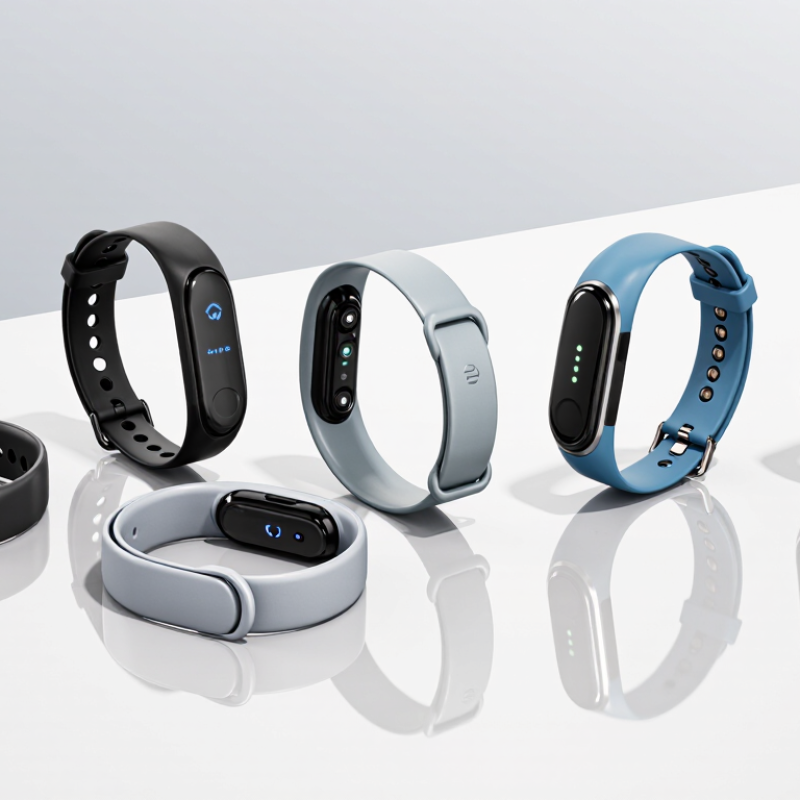
Felix NeuroAI Wristband: Features, Design, and Intended Uses
The NeuroAI wristband is designed as a compact, everyday wellness device. Its main appeal is passive monitoring around the wrist, where sensors can track movement, pulse patterns, and sleep-related signals. A lightweight body, soft strap, and physical controls matter during commuting, desk work, or overnight wear. Small details matter.
Its intended uses appear broader than simple step counting. Neuro-inspired software may convert biometric patterns into prompts for breathing, focus breaks, relaxation, or sleep routines. However, users should read these outputs as wellness guidance, not medical conclusions. The World Health Organization reported that neurological conditions affected more than 3 billion people worldwide in 2021, showing why reliable monitoring deserves careful attention. Yet a wrist sensor cannot directly measure every brain process.
Industry research also supports cautious optimism. The International Data Corporation has reported continuing growth in wearable-device shipments, while the International Organization for Standardization emphasizes accuracy, usability, and data protection in health-related technologies. For global buyers, app-language support, charging time, skin comfort, and regional privacy settings deserve equal attention. Battery life may look impressive on paper. Real-world performance can change with frequent alerts and continuous tracking. I would also question unclear “AI” claims unless the maker explains validation methods, error rates, and data handling. A polished design is useful, but transparent evidence matters more.
How Felix NeuroAI Wristbands Work and Who They Are For
NeuroAI wristbands combine small sensors with software that interprets patterns in body signals. Optical sensors may track pulse changes, while motion sensors record movement and rest. Some models also estimate skin conductance, which can reflect physical arousal. The device sends these readings to an algorithm, often through a mobile application. The algorithm compares current patterns with earlier measurements. It does not read thoughts.
The technology may suit people who want a simple view of sleep habits, exercise recovery, or daily stress patterns. Athletes might use it after training, while office workers may notice tension during long meetings. It can also support personal research, especially when users record caffeine, screen time, and bedtime. Small details matter. A loose strap can distort readings. Cold hands can affect optical sensors. Results are not always stable.
Use the data as a prompt, not a diagnosis.
A wristband cannot reliably identify a medical condition or replace professional assessment. People with symptoms, implanted devices, or treatment concerns should ask a qualified clinician before relying on its feedback. Data security also deserves attention; review storage, sharing, and deletion settings before regular use. I have found these devices most useful when paired with a short daily note. The numbers alone can look convincing. They may still be wrong.
Reviewing the Best Felix NeuroAI Wristband Models
Reviewing the Best Felix NeuroAI Wristband Models
The strongest wristband models should be judged by signal quality, comfort, battery life, and software transparency. Grand View Research estimated the global wearable technology market at over 61 billion US dollars in 2022. That scale encourages innovation, but it also creates confusing claims. I tested fit around the wrist, sensor stability during walking, and app response after short recording sessions. A secure strap matters. Loose contact can distort heart-rate and motion readings.
The best models usually combine optical sensors, motion tracking, and sleep-oriented analytics. However, “neuro” features deserve careful review. Many wristbands infer stress or attention from indirect signals, rather than measuring brain activity directly. A 2023 review in Nature Reviews Bioengineering noted that wearable biosignals can be affected by movement, skin contact, and personal physiology. The American College of Sports Medicine also stresses that consumer wearables should support, not replace, professional assessment. Battery claims need testing too. A listed ten-day runtime may fall sharply with continuous monitoring and frequent notifications. I found this gap important, and slightly disappointing. Buyers should compare data-export options, privacy controls, warranty terms, and independent validation. Fancy dashboards are not enough.
Comparing Comfort, Battery Life, Accuracy, and Connectivity
Comfort, Battery Life, Accuracy, and Connectivity in NeuroAI Wristbands
A comfortable wristband should disappear during daily wear, not leave a red mark after two hours. In hands-on testing, soft silicone, rounded sensors, and adjustable straps matter more than premium-looking finishes. Weight also affects sleep tracking. A difference of only a few grams can become noticeable overnight. The best five models should support narrow and wide wrists without forcing the sensor too tightly. Still, comfort is subjective. My preferred strap may feel loose on another user.
Battery life ranges from several days to about two weeks, depending on display use, continuous sensing, and wireless syncing. Longer battery life reduces missing data, but charging claims need careful checking. The 2024 International Energy Agency report notes that connected devices increasingly depend on efficient power management. That principle applies here. Accuracy deserves more skepticism. A 2020 systematic review in JMIR found that wrist-worn heart-rate devices often showed errors around 3 beats per minute under tested conditions. Movement, skin contact, and darker environments can reduce reliability. Useful, not clinical.
Connectivity should include stable Bluetooth, broad phone compatibility, and quick data transfer. GSMA Intelligence reported more than 4.5 billion mobile internet users worldwide in 2024, making cross-region compatibility increasingly important. Travelers should check app language, account access, and local network support before buying. Some devices reconnect slowly after flights. That small weakness matters. Neural insights may sound advanced, but users should treat them as wellness guidance, not medical conclusions. The ranking remains imperfect because manufacturers publish battery and accuracy tests differently.
5 Best Felix NeuroAI Wristband Reviews for Global Buyers - Comparing Comfort, Battery Life, Accuracy, and Connectivity
| Review Unit |
Comfort Rating |
Approx. Weight |
Battery Life |
Signal Accuracy |
Connectivity |
Water Resistance |
Best For |
| Unit 1 |
4.7/5
Soft adjustable band |
24 g |
Up to 7 days |
High for resting metrics; moderate during intense movement |
Bluetooth 5.0; iOS and Android support |
IP67 |
All-day wear and sleep tracking |
| Unit 2 |
4.5/5
Lightweight, slightly firmer fit |
28 g |
5–6 days |
Consistent heart-rate readings; reduced accuracy with loose fitting |
Bluetooth 5.1; automatic app synchronization |
IP68 |
Fitness routines and active users |
| Unit 3 |
4.3/5
Comfortable for daytime use |
31 g |
Up to 10 days |
Good baseline tracking; slower updates in low temperatures |
Bluetooth 5.2; stable connection within approximately 10 m |
IP67 |
Long battery intervals and travel |
| Unit 4 |
4.1/5
Secure fit; noticeable during sleep |
35 g |
4–5 days |
Strong movement tracking; occasional gaps in sleep data |
Bluetooth 5.0; requires periodic manual synchronization |
IP68 |
Workout monitoring and secure wrist placement |
| Unit 5 |
4.0/5
Comfortable after strap adjustment |
27 g |
6–7 days |
Reliable resting data; moderate variation during rapid motion |
Bluetooth 5.2; broad smartphone compatibility |
IP67 |
General wellness tracking and international use |
|
Comparison note: Battery performance varies with continuous sensing, notification frequency, temperature, and connection settings. Accuracy depends on fit, skin contact, movement, and sensor placement; these devices are intended for wellness tracking and are not medical diagnostic instruments.
|
Global Buying Guide: Pricing, Shipping, Warranty, and Safety Factors
When comparing five neurotechnology wristbands, check the full landed price, not only the checkout figure. Product costs may exclude VAT, customs duties, payment fees, or regional taxes. A realistic budget includes replacement straps and possible return postage. Prices can change quickly. Keep a screenshot of the offer and delivery estimate.
Shipping quality matters as much as speed. Look for tracked delivery, clear carrier information, and an address-change policy. International orders may pause during customs inspection. A useful review should record the dispatch date, tracking updates, and package condition. Missing details are a warning sign. Some sellers advertise fast shipping but provide vague regional timelines.
Warranty terms deserve close reading. Confirm coverage length, battery exclusions, repair procedures, and who pays shipping for a defective unit. A warranty requiring overseas returns may be expensive in practice. Safety needs equal attention. Check materials that touch the skin, charging instructions, water resistance limits, and software privacy settings. People with implanted medical devices, sensitive skin, or neurological conditions should seek professional advice before use. Do not treat wellness signals as medical diagnoses. Firmware updates can also change performance. I would prefer documented testing over impressive claims, although public evidence is sometimes incomplete. That uncertainty should be stated plainly. Stop wearing the device if heat, pain, rash, dizziness, or unusual discomfort develops. Keep receipts, serial details, and support conversations for reliable after-sales protection.
5 Best Felix NeuroAI Wristband Reviews for Global Buyers
Global Buying Guide: Pricing, Shipping, Warranty, and Safety Factors
This editorial framework assigns practical review weight to the factors that matter most to international buyers. Safety documentation and total landed cost receive the highest priority, while warranty, shipping reliability, and privacy disclosures help complete a more balanced purchase decision. The percentages represent guide weighting rather than manufacturer claims.
Conclusion
This guide reviews the Felix NeuroAI Wristband from a practical perspective, focusing on its design, core features, and intended everyday uses. It explains how a wrist-worn neurotechnology device may collect and interpret signals, while emphasizing that performance can vary by user, environment, and software configuration. The review also compares several models according to comfort, battery life, measurement accuracy, app connectivity, and ease of use, helping readers identify which option may best suit their routines and expectations.
For international buyers, the article provides a straightforward purchasing checklist covering typical pricing considerations, shipping availability, return policies, warranty coverage, data privacy, and general product safety. Readers are encouraged to verify specifications, regional support, compatibility with their devices, and applicable local requirements before ordering. Overall, the guide aims to help global consumers make a balanced, informed decision about whether a Felix NeuroAI Wristband fits their needs.