About
Videos News Careers Contact Providers Investors Explore Felix
Fasikl Blog

Neuro-AI & Therapeutic Insights

Latest news, clinical updates, and technical articles on bioelectronic technology and essential tremor solutions.

0%

Tremor can turn ordinary moments into difficult tasks: lifting a cup, signing a receipt, or fastening a shirt. A Wearable Tremor Relief Device may help some users reduce hand shaking during selected activities. It cannot promise a cure. Results vary with tremor type, severity, medication, and correct placement.

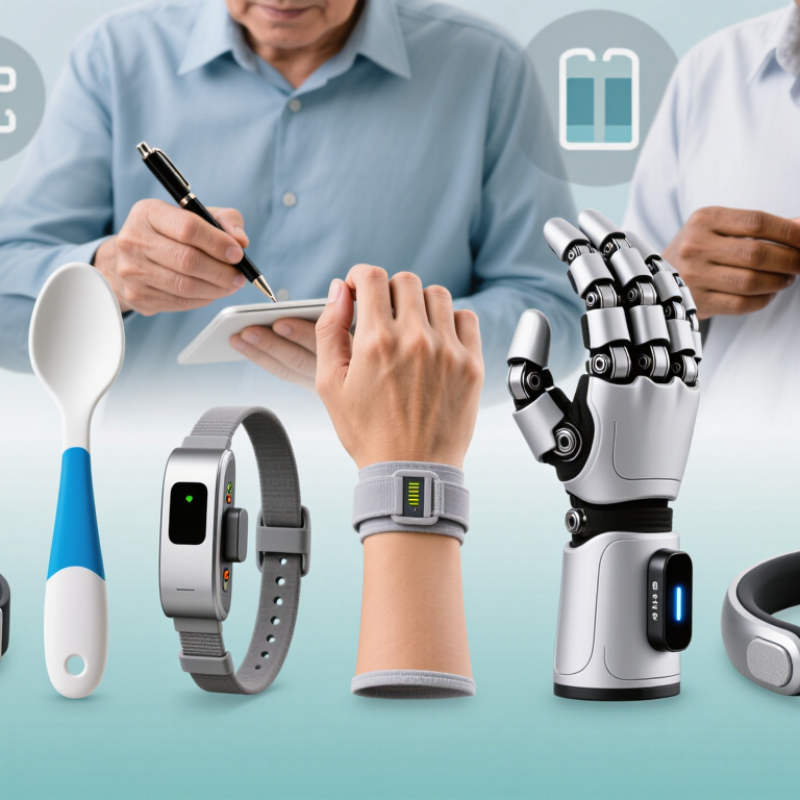
Dr. Michael S. Okun, a neurologist and movement-disorder specialist, has said, “There is no one-size-fits-all approach to treating Parkinson’s disease.” That principle also matters when comparing wearable tremor technologies. Some devices use electrical stimulation. Others apply physical support, counterweighting, or motion-control techniques. Their designs differ visibly: a slim wristband, a stabilized utensil, or a compact hand-mounted unit. Comfort matters. So does control.

This guide reviews seven leading options for global buyers, focusing on clinical evidence, usability, battery life, charging, app support, and after-sales service. It also considers whether manufacturers clearly explain limitations and intended users. That detail is easy to overlook. It should not be.

Regulatory clearance differs across countries. Import rules, warranty coverage, language support, and replacement-part access can also change the real cost. A device approved in one market may not carry the same status elsewhere. Buyers should verify these points before ordering.

No ranking can fit every person. A neurologist or occupational therapist can help identify suitable candidates and safe settings. Even then, expectations need testing. A promising demonstration may feel less impressive after hours of daily use. That is the uncomfortable part. Better technology still requires careful comparison, realistic goals, and personal trial whenever possible.

7 Best Wearable Tremor Relief Devices for Global Buyers

Clinical Context: 8.5M+ Parkinson’s Cases Worldwide (WHO, 2022)

7 Best Wearable Tremor Relief Devices for Global Buyers

Clinical Context: 8.5M+ Parkinson’s Cases Worldwide (WHO, 2022)

The World Health Organization reported more than 8.5 million people living with Parkinson’s disease worldwide in 2022. This figure gives wearable tremor technology urgent clinical relevance. Tremor can disturb eating, writing, dressing, and carrying a cup. It can also appear differently each day. That detail matters when comparing devices.

Seven wearable options deserve attention: weighted wristbands, gyroscopic stabilizers, vibration-feedback bands, peripheral nerve stimulation sleeves, sensor-guided smart gloves, hand orthoses, and motion-monitoring wrist sensors. Weighted bands may reduce unwanted movement through added resistance. Gyroscopic systems counter wrist rotation mechanically. Vibration-feedback devices may help some users regulate movement. Electrical stimulation requires professional guidance and careful screening. Smart gloves can support grip control, but finger comfort varies. Orthoses may improve stability, though they can feel restrictive. Monitoring sensors track tremor patterns without directly reducing them.

Clinical evidence remains uneven. A neurologist or occupational therapist should assess tremor type, medication timing, skin sensitivity, and hand strength. A device that works during breakfast may fail during handwriting. Small differences matter. Look for adjustable straps, washable contact surfaces, simple charging, and clear international support. Battery loss at midday is not a minor inconvenience. It can interrupt independence.

Buyers should treat marketing claims carefully. No wearable removes Parkinson’s tremor permanently. Benefits may be temporary, partial, or inconsistent. A seven-day diary can record tremor intensity, task success, comfort, and side effects. That record is more useful than a dramatic demonstration. The “best” device may change as symptoms progress. My own judgment would remain cautious without independent clinical data.

7 Best Wearable Tremor Relief Devices for Global Buyers - Clinical Context: 8.5M+ Parkinson’s Cases Worldwide (WHO, 2022)
Rank Wearable Device Category Primary Tremor-Relief Mechanism Typical Body Area Most Suitable For Clinical Evidence Status Typical Practical Benefits Important Limitations Buyer Evaluation Criteria
1 Non-invasive peripheral nerve stimulation wristband Applies controlled electrical stimulation to peripheral nerves involved in hand and forearm movement. Wrist and forearm Adults with action or essential tremor who need temporary improvement during eating, writing, or other hand activities. Moderate, device-specific evidence
Randomized and sham-controlled studies have reported short-term tremor reduction for some users; results are not uniform across all tremor types.
Hands-free use; adjustable stimulation; may support task-based tremor control without changing medication. May cause tingling, skin irritation, discomfort, or fatigue; effectiveness can vary by stimulation settings and diagnosis. Regulatory authorization in the buyer’s country, electrode placement, stimulation levels, battery life, contraindications, and clinician support.
2 Active tremor-canceling wrist orthosis Uses sensors, actuators, or controlled resistance to counter involuntary wrist movement while allowing intentional motion. Wrist and hand People whose tremor mainly affects wrist rotation or flexion during functional tasks. Moderate, mainly prototype and pilot evidence
Engineering and small clinical studies show potential, but long-term effectiveness and broad real-world adoption remain under evaluation.
Can provide mechanical stabilization while preserving selected voluntary movements. May be heavier or bulkier than passive supports; requires charging, fitting, calibration, and maintenance. Device weight, response delay, range of motion, noise, fit adjustment, cleaning, software updates, and local servicing.
3 Gyroscopic wrist stabilizer A rotating internal mass creates resistance to rapid angular movement and may reduce oscillatory wrist motion. Wrist and forearm Users seeking non-electrical support for tremor during short, upper-limb activities. Limited clinical evidence
Small studies and biomechanical testing suggest possible short-term assistance, but evidence is not sufficient to predict benefit for every diagnosis.
No electrical stimulation; can be used independently after fitting; may help during brief tasks. Added weight and inertia may increase fatigue; assistance can be task-specific and may not address finger tremor. Net weight, balance, activation method, noise, wrist mobility, comfort during prolonged use, and return policy.
4 Weighted wrist brace or tremor-loading orthosis Uses distributed weight, compression, or controlled resistance to reduce the amplitude of some involuntary movements. Wrist and forearm People who prefer a simple, non-powered aid and tolerate light external weight. Limited and variable evidence
Weighting may help selected users, but excessive loading can worsen fatigue and does not reliably suppress tremor in all people.
Simple construction; no charging; generally easy to clean and transport. May restrict movement, cause pressure points, or increase muscle fatigue; not appropriate for every joint or skin condition. Adjustable weight, breathable materials, pressure distribution, wrist range of motion, sizing, and skin inspection requirements.
5 Wearable focal-vibration device Delivers localized mechanical vibration intended to modify sensory feedback or temporarily interfere with tremor oscillation. Wrist, forearm, or hand Users interested in a non-invasive sensory approach for short-duration tasks. Mixed, limited clinical evidence
Research findings are heterogeneous, and the optimal frequency, location, and duration of vibration have not been standardized.
Non-invasive; typically lightweight; may be tested without medication changes. Benefits may be brief or inconsistent; vibration can be distracting and may aggravate sensory discomfort. Frequency and intensity controls, skin contact, operating noise, battery safety, washable components, and compatibility with daily activities.
6 Sensory-cueing glove or wrist-worn cueing system Provides tactile, pressure, vibration, or rhythmic cues intended to support movement initiation and reduce task-related motor disruption. Hand, fingers, and wrist People whose symptoms include movement initiation difficulty, task interruption, or tremor-related loss of manual control. Limited, task-specific evidence
External sensory cues may help selected motor tasks, but they are not established as a universal tremor treatment.
Can combine cueing with activity reminders or motion tracking; may support rehabilitation exercises. Glove fit can be difficult; cueing may not reduce tremor at rest; electronics may require frequent charging. Finger mobility, sizing accuracy, cue customization, sweat resistance, app accessibility, privacy settings, and data export options.
7 Sensor-based assistive exoskeleton glove Uses motion sensors and powered or spring-assisted support to help stabilize grasp and finger movement. Hand and fingers Users with substantial hand-control difficulty who need assistance with grasping or selected activities of daily living. Early-stage evidence
Most systems remain in research, rehabilitation, or pilot-use settings; evidence is generally based on small samples and short testing periods.
May assist grasp stability and provide objective movement data for rehabilitation or clinical monitoring. Higher cost and complexity; may be heavy, restrictive, noisy, or unsuitable for continuous wear. Clinical fitting, emergency release, actuator force limits, glove hygiene, maintenance, training requirements, and local technical support.
Clinical context: The World Health Organization reported more than 8.5 million people living with Parkinson’s disease worldwide in 2019 in its 2022 Parkinson disease information. Wearable devices may provide task-specific assistance, but they do not cure Parkinson’s disease or replace diagnosis, medication review, occupational therapy, or neurological care.
Buyer note: Evidence, regulatory status, availability, electrical standards, warranty coverage, and clinical indications vary by country. Buyers should confirm suitability with a qualified clinician, especially when using implanted electrical devices, managing skin sensitivity, or experiencing balance and gait symptoms.

Essential Tremor Context: Up to 5% Adult Prevalence (IETF)

Essential tremor affects more people than many buyers realize. The International Essential Tremor Foundation reports prevalence of up to 5% among adults. Tremor may appear during writing, drinking, eating, or holding a phone. It can remain mild, or interfere with work and independence. This variation makes wearable relief devices difficult to rank fairly. A device that helps one user may feel useless to another.

The seven strongest options usually include weighted wrist supports, stabilizing gloves, active tremor-cancellation wearables, neuromodulation bands, forearm braces, sensor-guided supports, and specialized grip devices. Weight may reduce movement for some users, but it can increase fatigue. Active systems may offer more targeted support, yet they require charging, correct placement, and careful adjustment. Comfort matters. So does battery life. Buyers should check skin-contact materials, sizing, return policies, and local medical-device requirements. Ask a clinician before changing treatment.

Reliable evaluation takes more than reading product ratings. Record when tremor appears, how long it lasts, and which tasks are affected. Test a device with a cup, pen, or spoon, not only during a quiet demonstration. Some early impressions can mislead. Improvement may come from confidence, slower movement, or extra support rather than tremor reduction alone. Clinical evidence also differs between device types and remains limited for some newer designs. Global buyers should seek transparent instructions, realistic claims, and accessible technical support. Personal fit is often the missing variable.

How Wearable Relief Works: Sensors, Stimulation, and Mechanical Damping

Wearable tremor relief devices combine sensing, feedback, and physical support in compact forms. A motion sensor tracks wrist acceleration and rotation several times per second. Software then separates intentional movement from rhythmic shaking. This distinction matters when someone reaches for a cup or holds a spoon. No sensor is perfect. Loose straps, sweat, and sudden movement can confuse the reading.

Stimulation-based systems use mild electrical pulses to influence nearby nerves or muscles. The goal is controlled movement, not numbness or forceful contraction. A suitable device should offer adjustable intensity, clear instructions, and automatic limits. Skin comfort deserves attention too. Redness, tingling, or discomfort should not be ignored. Guidance from a qualified clinician can help match settings to the user’s condition and medication plan.

Mechanical damping takes a quieter approach. Weighted supports, resistance elements, or stabilizing joints reduce unwanted motion before it reaches the hand. Imagine a spoon moving through thick syrup: deliberate movement remains possible, while rapid shaking meets resistance. This method may feel more predictable, though it can add weight and fatigue. Global buyers should check sizing, charging standards, language support, warranty terms, and local medical requirements. Online descriptions often sound more certain than the evidence allows. I would compare independent clinical data, return policies, and long-term comfort before trusting a polished demonstration.

7 Best Wearable Tremor Relief Devices for Global Buyers

How Wearable Relief Works: Sensors, Stimulation, and Mechanical Damping

Wearable tremor-relief systems commonly use inertial sensors, such as accelerometers and gyroscopes, to identify movement frequency and intensity. The chart shows approximate clinical frequency bands that can guide signal filtering, targeted peripheral stimulation, or mechanical damping. These ranges overlap because tremor frequency varies between individuals and during different activities.

Clinical reference basis: movement-disorder diagnostic criteria and consensus literature, including the Movement Disorder Society tremor classification. Frequency values are approximate clinical ranges, not guaranteed device-performance results.

How to Rank Seven Devices: Efficacy, Safety, Comfort, Battery, and Cost

A fair ranking of seven wearable tremor relief devices should begin with efficacy, not appearance. Clinical evidence should report tremor reduction using validated tools, such as TETRAS or the Fahn-Tolosa-Marin scale. The World Health Organization reported over 8.5 million people living with Parkinson’s disease in 2019, showing a substantial need for practical support. However, many devices rely on small studies. That weakness deserves attention.

Safety comes next. Check skin pressure, heat, electrical output, motion limits, and emergency shutoff features. NICE guidance recommends individualized assessment for movement symptoms, so one setting cannot suit every user.

Comfort also matters during real tasks: a heavy wrist unit may feel acceptable for ten minutes, but tiring after cooking or writing. Record fit, noise, charging effort, and performance with different clothing.

Battery life should cover a normal day, not only laboratory testing. A device lasting eight hours may fail during travel or clinical appointments. Compare charging time, battery replacement, and protection against accidental activation. Cost should include accessories, subscriptions, repairs, and clinical support. Reports from the International Federation of Robotics show growing use of wearable assistive technologies, but market growth does not prove clinical value. My ranking would score evidence and safety highest, then comfort, battery reliability, and total cost. Still, the weighting is imperfect; users with severe tremor may reasonably value immediate control over longer battery life.

Global Buyer Checks: FDA, CE-MDR, IEC 60601, and Privacy Compliance

When comparing seven wearable tremor-relief devices, global buyers should verify the exact regulatory pathway, not trust a logo alone. FDA clearance, authorization, and approval have different meanings. Ask for the public device listing, intended use, and cleared indications. In Europe, CE-MDR compliance requires technical documentation, clinical evaluation, post-market surveillance, and, when applicable, notified-body involvement. A marketing certificate is not enough.

Electrical safety also needs evidence. IEC 60601-1 addresses basic safety and essential performance. IEC 60601-1-2 covers electromagnetic compatibility, important near phones, infusion pumps, and home appliances. Request current test reports, model numbers, and applicable editions. The World Health Organization estimates that more than 2.5 billion people need assistive products, with demand expected to exceed 3.5 billion by 2050. That scale makes weak verification a serious purchasing risk.

Privacy deserves equal attention. If a device records tremor patterns, motion, location, or therapy settings, buyers should examine data retention, encryption, deletion, and transfer controls. IBM’s 2024 Cost of a Data Breach Report placed the average healthcare breach cost at 9.77 million US dollars. That figure is sobering. Check GDPR obligations for European users and HIPAA applicability in the United States; they are not interchangeable. I would not treat attractive app screenshots as evidence of compliance. Battery heating, skin irritation, charging failures, and false alerts also need real-world documentation. Some product files remain incomplete. That should be stated plainly.

FAQS

How can wearable devices help people with hand tremor?

They may reduce shaking through sensors, vibration, stimulation, added weight, or mechanical resistance. Results vary. A device may help during meals but fail during handwriting.

Which wearable type may suit different tremor needs?

Weighted supports can reduce rapid movement but may increase fatigue. Gyroscopic stabilizers resist wrist rotation mechanically. Smart gloves may support grip control, though finger comfort differs. Monitoring sensors track tremor without directly reducing it.

Are wearable tremor devices permanent treatments?

No wearable removes tremor permanently. Benefits may be temporary, partial, or inconsistent. Symptoms and medication timing can change daily. That uncertainty matters.

What should a clinician check before device use?

A qualified clinician should assess tremor type, hand strength, skin sensitivity, and medication timing. Electrical stimulation needs careful screening and professional guidance. Redness, tingling, or pain should not be ignored.

How can buyers test whether a device really helps?

Keep a seven-day diary with tremor intensity, task success, comfort, and side effects. Record specific tasks, such as holding a cup or signing a form. Demonstrations can look impressive. Real life is less tidy.

What practical features should global buyers inspect?

Check adjustable straps, washable contact surfaces, simple charging, sizing, and language support. Review battery life and charging standards before purchase. A midday battery failure can interrupt independence. That is not minor.

What safety and regulatory documents should buyers request?

Ask for the intended use, model number, regulatory pathway, and current safety test reports. Electrical products may need evidence related to basic safety and electromagnetic compatibility. Do not trust a compliance logo alone. Documents can be incomplete.

How should buyers protect tremor and health data?

Check data retention, encryption, deletion options, and international transfer controls. Review whether privacy rules apply in the buyer’s location. Motion data may reveal routines and therapy patterns. App screenshots prove very little.

Conclusion

This guide examines seven leading categories of wearable tremor relief devices for global buyers, placing their potential benefits in the context of more than 8.5 million people living with Parkinson’s disease worldwide and essential tremor affecting up to 5% of adults. It explains how these devices may support symptom management through motion sensors, targeted stimulation, or mechanical damping, while emphasizing that they are intended to complement—not replace—professional medical evaluation and treatment.

Each Wearable Tremor Relief Device is assessed using practical criteria, including reported efficacy, safety features, comfort during daily use, battery performance, ease of maintenance, and overall cost. The guide also outlines important purchasing checks for international customers, such as appropriate FDA or CE-MDR status where applicable, relevant IEC 60601 considerations, clear user instructions, data privacy protections, warranty coverage, and dependable after-sales support. These factors can help buyers make informed, responsible decisions based on individual needs and local requirements.

Elara

Elara

Elara is a professional marketing specialist dedicated to helping businesses understand complex products, identify meaningful opportunities, and make confident decisions in a changing marketplace. With extensive knowledge of the company’s solutions, she combines strategic insight, customer-focused......