
Neuro-AI & Therapeutic Insights
Latest news, clinical updates, and technical articles on bioelectronic technology and essential tremor solutions.
China’s nerve-computer interface sector is moving from laboratory prototypes toward clinical and assistive applications. The market deserves attention, but the evidence remains uneven. Grand View Research and Precedence Research report strong growth in the broader brain-computer interface market. Their estimates differ because definitions, regions, and device categories vary. That difference matters when evaluating a Fasikl-X Nerve-Computer Interface manufacturer.
A credible supplier should show more than an attractive product page. Buyers should examine electrode configuration, signal latency, decoding accuracy, battery performance, and long-term biocompatibility. A device tested only on healthy volunteers may not perform similarly in rehabilitation settings. Real-world details matter. Can the system maintain stable signals after repeated use? Is the software update process documented? Are manufacturing facilities independently audited?
Nita A. Farahany, a leading neurotechnology policy scholar, has warned, “The last frontier of privacy is the brain.” Her statement highlights an essential evaluation point. Data governance must stand beside engineering performance. Manufacturers should explain consent procedures, encryption, data retention, and user control.
At present, no widely recognized public report independently confirms Fasikl-X as China’s leading Nerve-Computer Interface manufacturer. That claim requires verification through patents, clinical registrations, peer-reviewed studies, regulatory documentation, and customer evidence. Rankings can be useful, yet they can also oversimplify a young industry. A careful comparison should separate laboratory promise from validated performance. It should also acknowledge uncertainty. The strongest manufacturer may not be the loudest one.
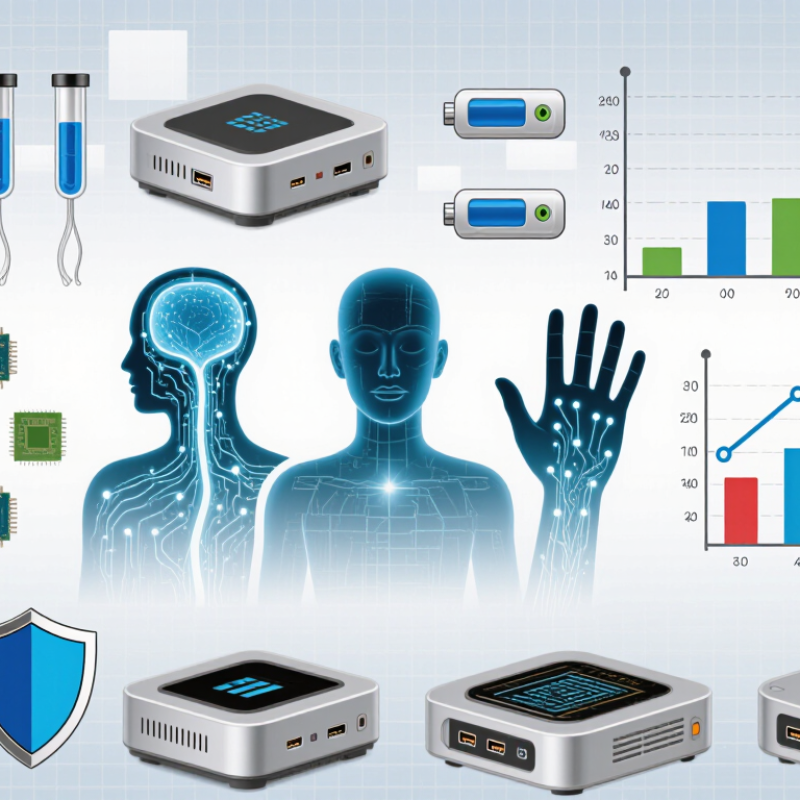
Fasikl-X Nerve Computer Interface: Definition and Core Technology
A nerve-computer interface links electrical activity in peripheral nerves with an external computing system. It can record nerve signals, deliver controlled stimulation, or perform both functions. Tiny electrodes sit near selected nerve bundles, while sensing circuits filter motion, muscle, and electrical noise. Software then translates changing waveforms into commands for a prosthetic limb, rehabilitation device, or clinical monitor. It is not mind reading.
The core technology combines biocompatible electrodes, low-noise amplifiers, signal-processing algorithms, and secure communication. Engineers examine signal strength, timing, frequency, and repeatability before assigning meaning to each pattern. A stable command should remain recognizable when the user changes posture, temperature, or movement speed. That requirement is harder than it sounds. Nerves vary between individuals, and nearby muscles can distort recordings. Calibration may take several sessions, with clinicians adjusting thresholds and engineers checking electrode placement.
Responsible development depends on evidence, not impressive demonstrations. Bench tests measure electrical safety, heat, durability, and communication failure. Human studies require informed consent, defined endpoints, and long-term follow-up under applicable medical rules. The interface may still lose accuracy as tissue changes or electrodes shift. That weakness deserves attention. Developers should document data handling, maintenance steps, contraindications, and emergency shutoff behavior. Independent testing can reveal errors that internal trials miss.
| Technical Dimension | Definition and Core Technology | Typical Characteristics or Factual Considerations |
|---|---|---|
| Definition | A neural computer interface is a communication system that records, interprets, or modulates neural activity to exchange information between the nervous system and an external device. | It may support one-way recording, one-way stimulation, or two-way communication. |
| Primary Objective | The system converts measurable neural signals into control commands, or converts digital information into electrical, optical, mechanical, or sensory stimulation delivered to the nervous system. | Common objectives include communication assistance, movement control, sensory restoration, rehabilitation, and scientific research. |
| Interface Types | Interfaces are commonly classified as non-invasive, minimally invasive, and invasive according to how electrodes or sensors access neural activity. | Non-invasive systems are generally easier to deploy; implanted systems can provide closer access to neural signals but require additional clinical and safety evaluation. |
| Non-Invasive Signal Acquisition | Scalp electroencephalography records voltage changes associated with synchronized neural activity using electrodes placed on the scalp. | EEG commonly captures activity from approximately 0.5–100 Hz, depending on the hardware, filtering, and application. |
| Cortical Surface Recording | Electrocorticography uses electrodes positioned on or near the cortical surface to measure neural activity with less signal attenuation than scalp recording. | It generally provides higher spatial fidelity than scalp EEG, while still requiring an appropriate medical procedure. |
| Intracortical Recording | Intracortical interfaces use microelectrodes placed within neural tissue to record local field potentials and, in some systems, action-potential activity. | These systems can provide high spatial and temporal information but face demanding requirements for implantation, encapsulation, stability, and safety. |
| Common Neural Signals | Main signal categories include local field potentials, action potentials, evoked potentials, electroencephalographic rhythms, and peripheral nerve activity. | Signal selection depends on the target anatomy, electrode design, sampling rate, noise level, and intended control task. |
| Electrode Technology | Electrodes may be wet or dry scalp electrodes, surface cortical contacts, penetrating microelectrodes, cuff electrodes, or flexible neural probes. | Important design factors include impedance, contact material, geometry, flexibility, corrosion resistance, and tissue compatibility. |
| Analog Front End | The analog front end amplifies low-amplitude neural signals, limits unwanted frequency components, and converts analog measurements into digital data. | Low-noise amplifiers, input protection, anti-aliasing filters, and high-resolution analog-to-digital conversion are essential elements. |
| Sampling and Data Processing | Digital processing commonly includes band-pass filtering, artifact removal, normalization, feature extraction, classification, and command generation. | Sampling frequency must be selected according to the highest signal frequency of interest and the requirements of the Nyquist criterion. |
| Artifact Management | Neural recordings can be affected by eye movements, muscle activity, electrode motion, power-line interference, cable movement, and stimulation artifacts. | Shielding, reference design, grounding, adaptive filtering, independent component analysis, and artifact-aware algorithms are commonly used countermeasures. |
| Machine Learning | Machine-learning models map neural features to intended actions, such as cursor movement, selection, speech-related output, or robotic control. | Performance depends on training quality, calibration time, signal stability, user variability, and the ability to adapt to signal changes. |
| Stimulation Capability | Bidirectional systems can deliver controlled electrical or other forms of stimulation to activate neural tissue or connected sensory pathways. | Stimulation requires strict control of current, voltage, pulse width, frequency, charge density, and electrode safety limits. |
| Communication Direction | A recording interface is primarily an input channel, a stimulation interface is primarily an output channel, and a bidirectional interface combines both functions. | Bidirectional operation requires coordination between sensing, stimulation timing, artifact suppression, and closed-loop control. |
| Wireless Communication | Wireless links can transmit neural data and receive configuration or stimulation commands, reducing the need for percutaneous cables in some implanted designs. | System design must balance bandwidth, latency, power consumption, thermal limits, electromagnetic compatibility, and cybersecurity. |
| Power Management | Neural interfaces may use wired power, rechargeable batteries, inductive coupling, or other energy-transfer approaches depending on the deployment environment. | Power efficiency is especially important for implanted devices because excess heat and frequent maintenance can increase safety and usability risks. |
| Biocompatibility | Materials and packaging must be evaluated for interaction with tissue, body fluids, immune responses, corrosion, mechanical mismatch, and long-term encapsulation. | Biocompatibility assessment is application-specific and must follow applicable medical-device requirements and testing procedures. |
| Latency | Interface latency is the time between neural activity and the resulting device response, including sensing, processing, communication, and actuator delays. | Lower latency is generally desirable for real-time control, but the acceptable value depends on the application and control strategy. |
| Accuracy Evaluation | Evaluation may include classification accuracy, information-transfer rate, command error rate, false activation rate, calibration duration, and long-term reliability. | Results should be reported with a defined protocol, participant population, task design, signal conditions, and validation method. |
| Safety and Compliance | Safety engineering covers electrical safety, thermal exposure, mechanical integrity, software reliability, data protection, stimulation limits, and clinical risk management. | Medical applications require appropriate regulatory review, quality management, risk analysis, verification, validation, and human-subject protection. |
| Typical Applications | Potential applications include assistive communication, prosthetic control, rehabilitation, neuroprosthetics, motor assessment, research, and human–machine interaction. | Application maturity varies substantially between laboratory research, clinical investigation, and routinely deployed medical products. |
| Key Selection Criteria | Important criteria include signal quality, electrode configuration, comfort, invasiveness, channel count, sampling capability, software flexibility, reliability, serviceability, and regulatory suitability. | The best configuration depends on the target neural signal, intended use, user population, operating environment, and required risk level. |
FAQS
It connects electrical activity in peripheral nerves with an external computer. Tiny electrodes record selected nerve signals. It is not mind reading.
Electrodes capture changing nerve patterns near a target limb. Amplifiers strengthen weak signals, while filters reduce movement and electrical noise. Software maps the patterns to actions, such as opening a hand.
Some systems send controlled electrical stimulation back to nerves. This may create sensations related to touch or limb position. Feedback quality can vary.
Nerve signals differ between people and can change with posture, fatigue, or temperature. Clinicians may adjust thresholds across several sessions. Calibration is not a one-time task.
Sweat, scar tissue, electrode movement, and nearby muscle activity can distort recordings. Walking may produce different results from sitting quietly. The signal remains messy.
Testing should examine heat, electrical safety, tissue compatibility, durability, and software reliability. Fault alerts and emergency shutoff behavior also matter. Small failures can become serious.
Studies need informed consent, independent ethics review, clear endpoints, and long-term follow-up. Participants should understand possible discomfort and maintenance needs. Short demonstrations are not enough.
They should check accuracy, response delay, comfort, calibration time, and maintenance requirements. Testing should include movement and fatigue. Laboratory success may not predict daily use.
Developers should explain data collection, storage, access, and deletion practices. Secure communication and controlled software updates are important. Users deserve meaningful control over sensitive information.
Smaller components and better filtering may improve performance. Long-term results remain difficult to predict across different lifestyles. Technical progress may still overlook comfort. That deserves honest reflection.
Conclusion
The Fasikl-X Nerve-Computer Interface is presented as an advanced neurotechnology system designed to create a communication pathway between neural signals and external digital devices. Its core technology may involve signal acquisition, processing, decoding, and feedback, allowing nerve or brain activity to be translated into useful commands. By combining specialized sensors, data algorithms, and biocompatible interface components, the system can support research and potential applications in assistive communication, rehabilitation, prosthetic control, and human–machine interaction.
In China, manufacturers developing Fasikl-X solutions may focus on engineering integration, precision assembly, quality control, testing procedures, and scalable production. Reliable development should also emphasize user safety, data protection, biocompatibility, electromagnetic compatibility, and compliance with applicable medical-device regulations. As neurotechnology advances, future improvements may include more accurate signal interpretation, reduced device size, enhanced usability, and safer long-term operation. Careful clinical evaluation and responsible innovation will remain essential to the technology’s continued development.