
About
Videos News Careers Contact Providers Investors Explore Felix
Fasikl Blog

Neuro-AI & Therapeutic Insights

Latest news, clinical updates, and technical articles on bioelectronic technology and essential tremor solutions.

0%

Neural Signal Decoding is moving from laboratory demonstrations toward practical clinical and commercial systems. These technologies translate electrical activity from the brain, nerves, or muscles into commands for software, prosthetics, robots, and assistive devices. A cursor crossing a screen can represent years of engineering, clinical testing, and patient experience.

Leigh Hochberg, MD, PhD, a neurologist and BrainGate investigator, has described the field’s purpose clearly: “We are trying to decode the neural signals associated with movement and use those signals to control a device.” His statement keeps the focus on function, not futuristic marketing. For global buyers, that distinction matters. A strong supplier must demonstrate signal quality, stable performance, transparent validation, and responsible data handling. Hardware specifications alone are not enough.

This guide examines leading Neural Signal Decoding companies for international buyers. It considers clinical evidence, research partnerships, software flexibility, integration requirements, and support across regions. It also reviews practical details, such as electrode compatibility, calibration time, training demands, and system performance in real environments. Some company claims remain difficult to compare. The terminology is inconsistent. Evidence is still developing. That uncertainty should not be hidden.

Buyers should ask harder questions. Can the system perform beyond a controlled laboratory? How are failures recorded? Who owns the resulting data? What happens when a clinical workflow changes? A polished demonstration may conceal serious limitations. Still, careful suppliers can provide meaningful tools for communication, rehabilitation, and human-computer interaction. Progress is real, but it is uneven. This overview offers a grounded starting point for evaluating the market.
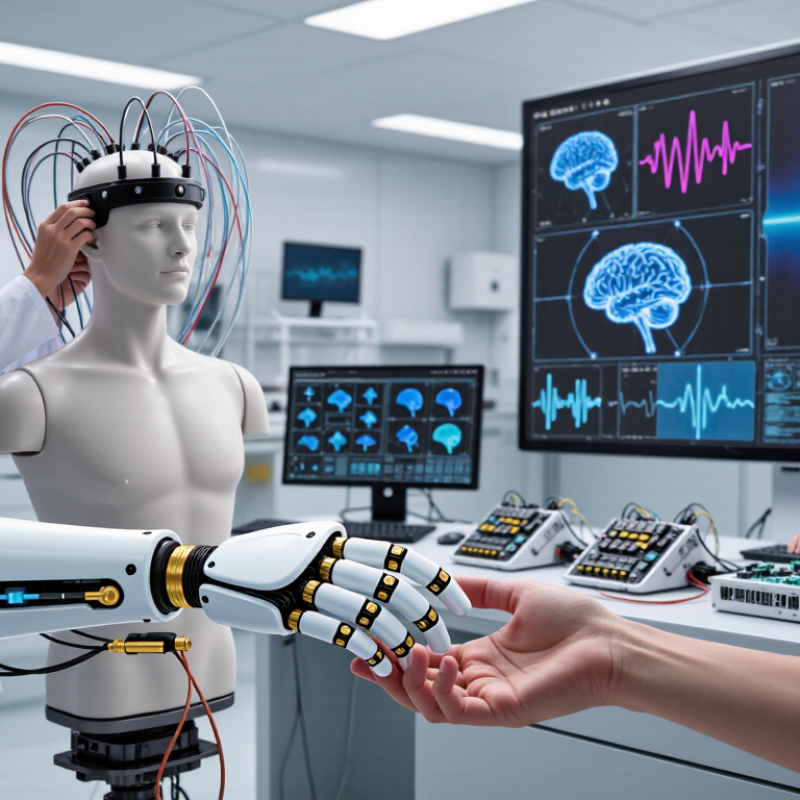
Top Neural Signal Decoding Companies for Global Buyers

Neural Signal Decoding: Definition, Scope, and Core Technologies

Neural signal decoding converts patterns from the nervous system into understandable data or control commands. Sensors may record electrical activity from the brain, muscles, or peripheral nerves. Software then filters noise, extracts features, and estimates the user’s intended action. The process can support assistive communication, rehabilitation, prosthetic control, and human-computer interaction.

Its scope varies widely. Non-invasive systems often use scalp-based electrical sensors, while research platforms may use implanted or surface electrodes. Core technologies include signal amplification, artifact removal, machine learning, adaptive algorithms, and real-time feedback. A practical decoder must handle movement, fatigue, skin contact, and changing signal quality. Clean laboratory accuracy can decline sharply in daily environments.

That gap deserves attention. A system may recognize ten commands in testing but only six during extended use. Buyers should request validation methods, calibration time, latency data, and performance across different users. They should also examine data governance, informed consent, cybersecurity, and clinical oversight where relevant. Transparent documentation matters more than impressive demonstrations. Some decoding models remain difficult to interpret. This is a weakness, not a minor detail. Careful deployment requires measurable limits, human review, and room to revise the design.

Neural Signal Decoding: Definition, Scope, and Core Technologies

Representative upper frequency limits commonly used in neural recording and decoding workflows.

Neural signal decoding converts electrical activity from the nervous system into interpretable information, such as movement intention, speech features, or sensory states. EEG, ECoG, local field potentials, and action potentials differ in invasiveness, spatial resolution, and usable frequency range. The values shown are representative upper frequency limits rather than universal technical specifications; actual recording bandwidth depends on sensors, amplifiers, filtering, and study design.

How Neural Decoding Companies Develop and Validate Their Solutions

Neural decoding companies begin by defining a practical signal-to-action problem. They may translate brain activity into cursor movement, speech selection, or assistive control. Engineers then choose sensors, recording sites, and sampling rates for the intended environment. A laboratory setup can produce clean data. Real users introduce motion, fatigue, sweat, and changing attention.

Development depends on carefully designed datasets. Teams collect repeated sessions from diverse participants, with informed consent and secure data handling. They label each signal segment against a verified user action. Researchers often compare several model types, from statistical methods to neural networks. Performance should include accuracy, response time, false commands, and calibration effort. A result that looks impressive after one session may weaken over time.

Validation needs independent testing. Companies should separate training data from unseen participant data and report confidence intervals. Cross-session testing matters because neural patterns can shift daily. Human factors specialists also examine comfort, cognitive load, and recovery from errors. Small pilot studies can reveal practical problems early. Yet they remain limited. More participants, longer follow-up, and transparent reporting improve reliability. No model is flawless. A decoder may fail during distraction, poor sensor contact, or an unfamiliar task. Responsible developers document these weaknesses instead of hiding them. External researchers, clinicians, and users can challenge assumptions before wider deployment. That scrutiny makes the technology more credible, safer, and more useful for global buyers.

Top Neural Signal Decoding Companies for Global Buyers - How Neural Decoding Companies Develop and Validate Their Solutions

Technology-development and validation benchmarks for buyer evaluation

Solution profile Primary signal modality Typical temporal resolution Typical spatial resolution Core development workflow Common decoding outputs Validation design Recommended performance measures Key buyer due-diligence points
Non-invasive control profile Scalp electroencephalography (EEG) Milliseconds; EEG commonly captures rapid neural changes Centimetre-scale and affected by volume conduction Signal quality checks, re-referencing, band-pass filtering, artefact removal, feature extraction, model training, and calibration Discrete commands, motor-intent classes, attention states, or continuous cursor direction Subject-independent and subject-specific tests, separate recording sessions, and robustness testing with movement and electrode shifts Balanced accuracy, macro-F1, confusion matrix, calibration time, false-command rate, and session-to-session degradation Electrode setup time, dry-versus-gelled performance, tolerance to motion artefacts, language support, and data-retention controls
High-fidelity cortical profile Electrocorticography (ECoG) Milliseconds Millimetre-scale, depending on electrode spacing and coverage Electrode localization, bad-channel screening, spectral or time-domain feature extraction, dimensionality reduction, and task-specific modelling Speech-related features, movement trajectories, grasp categories, or binary and multi-class commands Leave-one-trial-out or leave-one-session-out evaluation, blinded labels, and comparison with an established baseline algorithm Accuracy, macro-F1, latency, information-transfer rate, word-error rate for speech tasks, and performance across electrode subsets Surgical dependence, electrode-placement variability, clinical-site requirements, safety documentation, and long-term signal stability
Implanted intracortical profile Intracortical multi-unit or single-unit recordings Milliseconds or faster, depending on acquisition and spike-processing settings Sub-millimetre to millimetre scale near the recording array Spike detection or thresholding, channel-quality monitoring, neural feature normalization, adaptive decoding, and closed-loop control Continuous cursor position, robotic-arm movement, grasp selection, or text-entry intent Pre-registered endpoints, held-out sessions, chronic follow-up, drift analysis, and testing under decoder recalibration conditions Root-mean-square error, target-acquisition time, success rate, bitrate, command latency, and performance after signal drift Implant longevity, surgical risk, wireless power and data links, cybersecurity, recalibration burden, and clinical-trial evidence
Optical haemodynamic profile Functional near-infrared spectroscopy (fNIRS) Seconds; haemodynamic responses are slower than electrical signals Centimetre-scale and limited to superficial cortical regions Optode-quality checks, motion correction, physiological-noise regression, haemodynamic feature extraction, and classification or regression Workload levels, task categories, motor imagery classes, or broad cognitive-state estimates Repeated-session testing, motion challenge protocols, comparison with physiological controls, and subject-independent cross-validation Macro-F1, balanced accuracy, sensitivity, specificity, calibration stability, and robustness to motion and skin-contact changes Headgear fit, ambient-light tolerance, skin and hair effects, portability, haemodynamic delay, and separation of neural from systemic signals
Magnetic-field profile Magnetoencephalography (MEG) Milliseconds Typically centimetre-scale source localization, depending on system design and modelling Environmental-noise suppression, head-motion correction, source reconstruction, spectral analysis, and supervised decoding Perceptual categories, motor states, language-related activity, or temporal event detection Cross-participant validation, independent test runs, source-space versus sensor-space comparison, and noise-condition testing Area under the ROC curve, balanced accuracy, event-detection latency, localization error, and reproducibility across sessions Facility requirements, magnetic shielding, subject motion, system availability, operating cost, and exportability to clinical environments
Peripheral neural-interface profile Peripheral nerve or muscle-adjacent electrical recordings Milliseconds Local to the implanted or surface electrode interface Contact-impedance monitoring, artefact suppression, channel selection, temporal feature extraction, and adaptive intent decoding Limb or hand movement intent, grasp classes, prosthetic-control commands, or stimulation triggers Repeated-use studies, task-level success testing, held-out days, latency measurement, and evaluation during realistic movement Command accuracy, false activation rate, response latency, task-completion time, robustness to electrode displacement, and user workload Implant or wearable safety, encapsulation and durability, power consumption, connector reliability, user training, and maintenance requirements
Buyer evaluation note: The entries describe established signal-processing and validation practices by modality. Actual performance depends on the participant population, recording hardware, task definition, dataset size, test protocol, and intended use environment. Independent, session-separated testing should be requested before comparing suppliers.

Leading Global Suppliers of Neural Signal Decoding Systems

Global buyers are seeking reliable neural signal decoding systems for clinical research, rehabilitation, and human-machine interfaces. Industry estimates vary, but Grand View Research valued the brain-computer interface market at about USD 2.4 billion in 2023. Its forecast suggests strong double-digit growth through 2030. This gap between reports deserves attention. Definitions differ across suppliers, devices, and applications.

Leading global suppliers usually fall into three groups: research-platform developers, medical-device manufacturers, and specialized system integrators. Their systems may combine EEG, intracortical, or peripheral nerve recordings with signal-processing software.

Buyers should inspect sampling rates, electrode compatibility, latency, calibration time, and long-term signal stability. A polished dashboard is not enough. Poor motion handling can distort real-world results.

Professional procurement teams should request validation data, cybersecurity controls, training records, and documented maintenance procedures. ISO 13485 quality systems support medical manufacturing, while IEC 60601 standards address electrical safety in applicable clinical equipment. A 2024 MarketsandMarkets report also projects rapid BCI market expansion, yet commercial readiness remains uneven. Independent testing is essential. Supplier claims can outpace evidence. Pilot deployments should measure accuracy, false-command rates, operator fatigue, and performance across different users. These details often reveal whether a decoding system is genuinely scalable or merely impressive in controlled demonstrations.

Comparing Products, Applications, and Technical Capabilities

Global buyers assessing neural signal decoding products should compare signal quality, usability, and evidence together. Core systems usually combine wearable sensors, amplifiers, filtering software, and decoding models. Dry electrodes reduce setup time, while wet electrodes can provide cleaner contact during controlled studies. Optical and implanted approaches serve different research or clinical contexts. Ask for raw-data access, sampling rates, channel counts, and documented latency. Small specifications often reveal large operational differences. They matter.

Application fit changes the buying decision. A rehabilitation team may need stable movement decoding, simple calibration, and safeguards against fatigue. A research laboratory may prioritize flexible APIs, synchronized video, and exportable datasets. Industrial training environments may value comfort, wireless range, and consistent performance across users. Evaluate accuracy outside demonstrations. Request results across sessions, lighting conditions, hair types, motion levels, and novice users. A high score from one participant proves little.

Technical capability should include model transparency, update controls, cybersecurity, and local data processing options. Cloud dependence may simplify installation, yet complicate privacy reviews and connectivity planning. On-device inference often improves responsiveness, but hardware limits can restrict model size. Check validation protocols, failure handling, maintenance schedules, and staff training. Independent testing adds authority, although published results may not match your setting. No product is perfect. Budget for adaptation, not just purchase. A careful pilot with predefined success measures remains the most reliable comparison method.

Key Factors for International Buyers Evaluating Vendors

Global buyers should assess neural signal decoding vendors beyond impressive accuracy claims. The World Health Organization’s Global Report on Health Equity for Persons with Disabilities (2022) estimates that 1.3 billion people experience significant disability. This creates real demand, but also raises the cost of unreliable systems.

Ask vendors for participant numbers, signal types, latency, and independent validation results. A laboratory score is not enough. Test performance across hair textures, skin conditions, languages, ages, and clinic environments. Request confidence intervals, not only average accuracy. The NIST AI Risk Management Framework stresses validity, reliability, transparency, and ongoing monitoring. These principles matter when decoded signals influence communication, rehabilitation, or assistive control.

Data governance deserves equal attention. Confirm encryption, retention periods, consent procedures, and cross-border transfer controls. ISO 27001-aligned security processes can provide useful evidence, but certification does not guarantee safe deployment. Review device classification, quality systems, and local regulatory pathways before signing a contract. A vendor should also explain calibration time, replacement parts, software updates, and technical support in your region.

Look closely at the total cost. Cloud fees, specialist training, and custom integration may exceed the initial hardware price. A high benchmark score can still mislead. I would require a supervised pilot with representative users and a clear failure-reporting process. No system is perfect. Vendors that acknowledge limitations often deserve more trust than those promising effortless decoding.

FAQS

What is neural signal decoding?

It converts nervous-system patterns into understandable data or control commands. Sensors may record brain, muscle, or peripheral nerve activity.

Which applications can neural decoding support?

It can support assistive communication, rehabilitation, prosthetic control, and human-computer interaction. Practical value depends on reliable signals.

What technologies are used in a decoding system?

Common components include signal amplification, noise removal, feature extraction, machine learning, adaptive algorithms, and real-time feedback.

Why can laboratory results decline during daily use?

Movement, fatigue, sweat, distraction, and poor sensor contact can change signal quality. Real life differs.

How should buyers evaluate system performance?

Request accuracy, response time, false-command rates, calibration time, and confidence intervals. Check results across users and repeated sessions.

Why is independent validation important?

Training data can make performance look stronger than it is. Testing unseen users and later sessions reveals weaknesses.

What practical details should procurement teams inspect?

Review sensor compatibility, sampling rates, latency, maintenance procedures, training records, cybersecurity controls, and long-term signal stability.

How should user data and consent be handled?

Teams should obtain informed consent and store data securely. Documentation should explain access, retention, and permitted uses.

Can neural decoding models work perfectly?

No model is flawless. Performance may weaken during distraction, unusual tasks, or changing attention.

What makes deployment responsible?

Developers should disclose limits, include human review, monitor errors, and revise the design when evidence changes. One demonstration is not proof.

Conclusion

Neural Signal Decoding refers to the process of translating neural activity into meaningful data, commands, or behavioral insights through technologies such as electrophysiological sensing, signal processing, machine learning, and multimodal analysis. This field supports applications in clinical research, assistive communication, rehabilitation, human–machine interaction, and neuroscience. Effective solutions typically combine specialized sensors, secure data platforms, algorithm development, and rigorous validation using accuracy, reliability, usability, and safety benchmarks.

Leading suppliers serve global buyers through different product formats, including research platforms, wearable systems, software tools, and integrated solutions. Their capabilities may vary in signal quality, real-time performance, interoperability, customization, regulatory readiness, technical support, and data protection. When evaluating vendors, international buyers should compare application suitability, development transparency, validation evidence, total ownership costs, deployment requirements, training services, and long-term scalability. A structured assessment helps organizations select dependable technologies that align with their scientific, clinical, or industrial objectives.

Ethan

Ethan

Ethan is a professional marketing specialist with a deep understanding of the company’s products, customers, and industry landscape. Through years of experience in market research, content strategy, and customer communication, he is skilled at turning complex product information into clear,......