
About
Videos News Careers Contact Providers Investors Explore Felix
Fasikl Blog

Neuro-AI & Therapeutic Insights

Latest news, clinical updates, and technical articles on bioelectronic technology and essential tremor solutions.

0%

A Noninvasive Neuromodulation Device changes or influences nervous-system activity without surgically implanted electrodes. Common examples include transcranial magnetic stimulation (TMS), which delivers magnetic pulses through a coil held near the scalp, and transcranial electrical stimulation, which uses small electrodes on the head. Some external devices stimulate nerves near the ear or neck. The method, target, and intended use vary.

The topic matters in a world where neurological and mental health conditions affect many people. The World Health Organization estimated that 280 million people worldwide lived with depression in 2019, according to its 2023 fact sheet. That figure describes a health burden, not the number of people suited to device treatment. Not quite. A market estimate needs similar care: Grand View Research valued the broader global neuromodulation devices market at about USD 6.8 billion in 2023 and projected continued growth through 2030. Its category includes more than noninvasive products, so the estimate does not measure this segment alone. That distinction matters.

For readers, the central questions are practical: how does stimulation reach its target, what evidence supports a particular use, and what risks require clinical guidance? A device may sit on a clinic cart, with a coil positioned carefully over the scalp; another may use adhesive electrodes. These are not interchangeable approaches. Regulatory clearance, treatment protocols, and evidence differ by device and indication. Even the label can mislead. This overview explains the basic technology and its limits, while treating market forecasts as context—not proof that a device works for every patient.
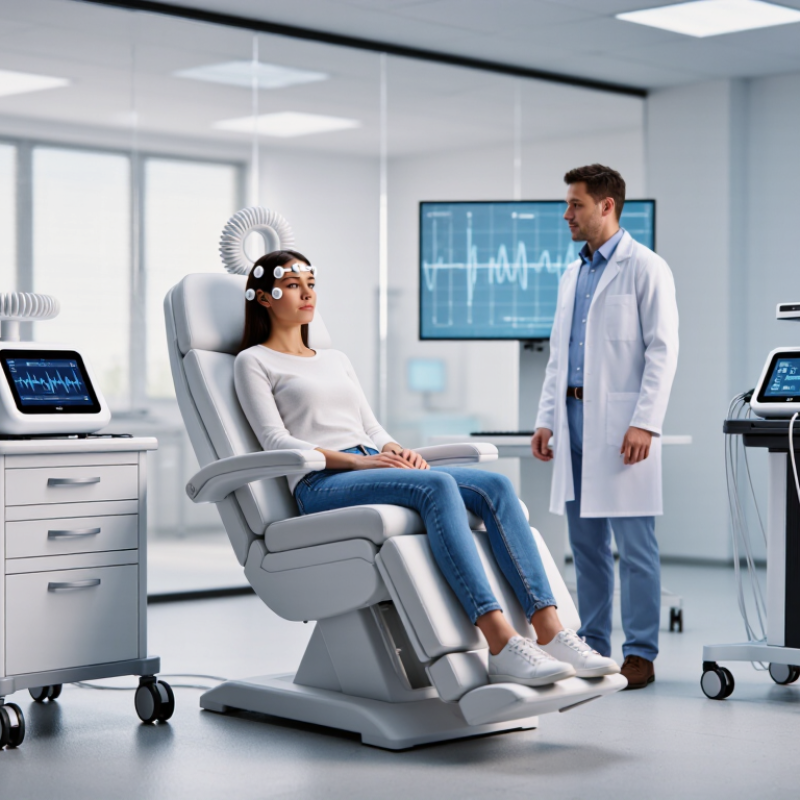
What Is a Noninvasive Neuromodulation Device?

Definition and Core Components of a Noninvasive Neuromodulation Device

A noninvasive neuromodulation device delivers energy through the skin to influence activity in targeted nervous-system circuits. It does not require an implant. The exact design depends on the method, such as electrical, magnetic, or acoustic stimulation. Each method needs a way to generate energy and guide it toward a treatment area.

The control unit sets parameters such as intensity, timing, and session duration. A delivery component then transfers the energy: this might be surface electrodes, a magnetic coil, or an acoustic transducer. Placement matters. A clinician may use anatomical landmarks, imaging, or positioning guides to align the component. Some systems include sensors that monitor contact or movement, though not every device has them. Safety features can limit output and stop a session if readings fall outside preset ranges. Small details count, including dry electrode contact or a coil sitting at the wrong angle.

An interface lets the operator review settings and session progress. It should make key information easy to check, not hide it in menus. Devices differ, and a familiar-looking control panel does not guarantee the same function. The engineering is tidy; real-world use is less so. Training, device-specific instructions, and clinical judgment help address that gap. These systems are not interchangeable, and their effects depend on the technology, settings, and person receiving treatment.

How Noninvasive Neuromodulation Devices Influence Neural Activity

What Is a Noninvasive Neuromodulation Device?

How Noninvasive Neuromodulation Devices Influence Neural Activity

A noninvasive neuromodulation device aims to influence brain or nerve activity without surgery. It delivers energy through the skin, using methods such as magnetic pulses or low-intensity electrical currents. The goal is not to control thoughts or switch off a whole brain region. Effects are subtler and depend on the method, placement, and person.

With transcranial magnetic stimulation, a coil near the scalp produces brief magnetic pulses. These induce small electrical currents in nearby brain tissue, changing how readily some nerve cells respond. Transcranial electrical stimulation passes a weak current between scalp electrodes. It may shift neural excitability, rather than make neurons fire on command. Small shifts, not switches.

Activity also unfolds across connected networks. Changing responsiveness in one area may influence communication with other regions, though researchers are still studying when and how reliably this happens. During a session, someone might hear a click from magnetic stimulation or feel mild tingling under an electrode. That sensation does not reveal whether the intended neural effect occurred. Placement and settings matter, and responses vary between people. A careful clinician considers a person’s health history, monitors comfort, and explains known uncertainties. Even well-studied methods do not work identically for everyone. The science is useful, but not perfectly tidy.

What Is a Noninvasive Neuromodulation Device? - How Noninvasive Neuromodulation Devices Influence Neural Activity

Device approach How energy or signals are delivered How neural activity may be influenced Common research or clinical context Important considerations
Transcranial magnetic stimulation (TMS) A coil placed against the scalp produces brief magnetic pulses that induce electrical currents in nearby brain tissue. Depending on pulse pattern, intensity, coil position, and individual factors, stimulation can trigger neural activity or change the excitability of a targeted cortical network. Used clinically for certain conditions, including depression, and studied for other neurological and psychiatric applications. It is noninvasive but requires trained operation. Temporary scalp discomfort or headache can occur; seizures are a rare, recognized risk.
Transcranial direct current stimulation (tDCS) Electrodes on the scalp deliver a low-intensity, steady electrical current. Usually does not directly make neurons fire. It can modestly shift the likelihood of neural firing, with effects shaped by electrode placement, brain state, and anatomy. Investigated in research on learning, rehabilitation, and several neurological or mental health conditions. Effects vary across people and protocols. It should not be assumed that one electrode always “excites” and another always “inhibits” the brain.
Transcranial alternating current stimulation (tACS) Scalp electrodes deliver a weak current that periodically reverses direction. May influence the timing or synchronization of neural activity at selected frequencies. Evidence for reliably changing specific brain rhythms or producing lasting effects is still developing. Primarily studied for brain rhythms, cognition, and possible therapeutic applications. Results depend on stimulation frequency, placement, and the person’s brain state; research findings are mixed and do not establish a universal effect.
Transcutaneous vagus nerve stimulation (taVNS) Electrical pulses are delivered through skin electrodes, commonly at parts of the outer ear; some approaches target the neck region. Stimulation may activate sensory fibers associated with the vagus nerve and influence brainstem pathways connected with broader neuromodulatory networks. Studied for a range of neurological, autonomic, and mental health applications. Effects depend on the stimulation site and protocol. Evidence and clinical status vary by indication; skin irritation or local discomfort may occur.
Low-intensity transcranial focused ultrasound Focused acoustic energy is directed through the skull toward a selected brain region. May alter neural activity through mechanical effects on tissue and cell membranes; the precise mechanisms and optimal parameters remain under investigation. An emerging research approach for precisely targeted neuromodulation. Not equivalent to diagnostic ultrasound. Skull properties affect delivery, and careful control of exposure and safety monitoring are essential.

In brief: Noninvasive neuromodulation devices influence nervous-system activity without surgically implanted electrodes. Their effects depend on the technology, stimulation settings, target, and individual; they do not all work in the same way or have the same level of clinical evidence.

Major Types of Noninvasive Neuromodulation Devices

Noninvasive neuromodulation devices alter nervous-system activity without surgery. Their methods differ in energy, target, and how precisely clinicians can focus stimulation. The World Health Organization’s 2023 depression fact sheet estimates that 280 million people worldwide live with depression, one reason these approaches attract clinical interest. That figure describes need, not proof that any device works for every person.

Transcranial magnetic stimulation (TMS) sends brief magnetic pulses through a coil held against the scalp. Repetitive TMS and theta-burst stimulation use different pulse patterns to influence brain circuits. Transcranial electrical stimulation, including tDCS and tACS, passes weak currents through scalp electrodes; placement and session protocols matter. Small details count. A strap can shift, or gel can dry, changing contact during treatment.

Other devices stimulate peripheral nerves. Transcutaneous vagus nerve stimulation applies mild electrical pulses near the ear or neck, while trigeminal nerve stimulation targets facial nerve branches. Noninvasive focused ultrasound is also being studied, but its clinical role remains less established. The map is uneven. AHRQ evidence reviews emphasize that results depend on condition, protocol, and study quality; device categories alone cannot predict benefit. That distinction is easy to overlook, especially when a treatment sounds precise.

Major Types of Noninvasive Neuromodulation Devices

Illustrative stimulation or session-time ranges for common protocols (minutes)

TMS uses magnetic pulses; transcranial electrical stimulation (tDCS, tACS, and tRNS) applies weak electrical currents through scalp electrodes; taVNS stimulates an auricular branch of the vagus nerve; and low-intensity focused ultrasound uses acoustic energy. The ranges shown are illustrative, vary by protocol and indication, and are not a comparison of effectiveness.

Clinical and Research Uses of Neuromodulation Devices

A noninvasive neuromodulation device changes nervous-system activity without placing an electrode or implant inside the body. Depending on the method, it may use magnetic pulses or gentle electrical currents delivered through the scalp or skin. In clinical care, selected forms of stimulation are used for conditions such as depression, migraine, or certain types of pain. Treatment is not a general brain boost. A qualified clinician reviews the diagnosis, medications, medical history, and possible risks before choosing a protocol. Some sessions are brief. Responses and side effects can differ from person to person.

Researchers also use these devices to explore how neural circuits contribute to movement, attention, mood, and pain. For example, a lab may stimulate a motor-area site, then measure small changes in hand-muscle activity. Carefully designed studies compare stimulation with sham procedures and track outcomes over time. This helps separate treatment effects from expectation, practice, or natural recovery. Yet results from a research protocol do not automatically translate into routine care. Timing, placement, intensity, and participant characteristics matter, and findings can be mixed. That uncertainty deserves attention. Good practice includes clear consent, trained supervision, and honest discussion of what remains unknown.

Safety, Limitations, and Factors Affecting Treatment Selection

What Is a Noninvasive Neuromodulation Device?

Noninvasive neuromodulation devices alter brain activity without surgery. Common approaches include magnetic stimulation and low-intensity electrical stimulation. Their safety depends on the device, protocol, and person receiving treatment. With transcranial magnetic stimulation, clinicians check seizure history, medications, sleep, and metal or electronic implants near the head. Rare, but real. The 2021 safety recommendations from the International Federation of Clinical Neurophysiology describe seizures as an uncommon but important risk, especially when treatment parameters or patient risk factors are not carefully assessed. Screening is not a formality.

For transcranial direct current stimulation, temporary tingling, itching, or skin irritation may occur beneath the electrodes. Bikson and colleagues’ 2016 safety review examined more than 33,000 sessions and reported no serious adverse events attributable to standard protocols. That finding is reassuring, not a guarantee for every setup or patient. Treatment selection should reflect the condition being treated, supporting evidence, medical history, practical access, and the person’s preferences. Evidence and approved uses differ across conditions and stimulation methods. An implanted device, a history of seizures, or sensitive scalp skin can change the risk discussion. I would not assume that “noninvasive” means simple or suitable for everyone; careful follow-up still matters.

FAQS

What is a noninvasive neuromodulation device?

It delivers energy through the skin to influence nervous-system activity without an implant. Methods can include magnetic pulses, electrical currents, or acoustic stimulation.

What parts does a typical device include?

A control unit sets intensity, timing, and session length. Electrodes, a coil, or an acoustic transducer delivers the energy. Sensors may monitor contact or movement.

Why does device placement matter?

Placement helps direct stimulation toward the intended area. Clinicians may use anatomical landmarks, imaging, or positioning guides. Small shifts can matter.

What conditions may these devices be used for?

Selected methods are used in clinical care for conditions such as depression, migraine, or certain types of pain. They are not general brain boosters.

How are these devices used in research?

Researchers may stimulate a motor-area site and measure changes in hand-muscle activity. Studies can compare stimulation with sham procedures and track outcomes over time.

What safety checks may happen before treatment?

A clinician may review medical history, medications, sleep, and seizure history. Metal or electronic implants near the head can also affect the risk discussion. Screening matters.

What side effects can occur?

Magnetic stimulation carries an uncommon seizure risk. Electrical stimulation may cause temporary tingling, itching, or skin irritation beneath electrodes. “Noninvasive” does not mean risk-free.

How is a treatment approach selected?

Selection depends on the condition, supporting evidence, medical history, access, and personal preferences. Methods and settings are not interchangeable, and results can vary. Some uncertainty remains.

Conclusion

A Noninvasive Neuromodulation Device is a system that uses external energy or stimulation to influence the activity of the nervous system without requiring surgery. Its core components typically include a power source, a control unit, and an applicator or electrode that delivers stimulation to a selected area. Depending on the method, stimulation may use magnetic fields, electrical currents, sound waves, or other forms of energy. These approaches can alter patterns of neural signaling and may affect how brain circuits communicate.

Different device types are used in clinical care and research to investigate or support the management of neurological and mental health conditions. Their potential benefits, treatment protocols, and evidence vary, and results can differ among individuals. Selection should take account of the intended goal, the person’s health history, possible side effects, and the device’s limitations. Appropriate professional guidance and monitoring help ensure that treatment is chosen and delivered safely.

Elara

Elara

Elara is a professional marketing specialist dedicated to helping businesses understand complex products, identify meaningful opportunities, and make confident decisions in a changing marketplace. With extensive knowledge of the company’s solutions, she combines strategic insight, customer-focused......