
Export-Grade Neural Control & Tremor Suppression Hardware
Explore our CE-marked product lineup engineered for clinical precision, neural signal decoding, and real-time biomechanical feedback control.
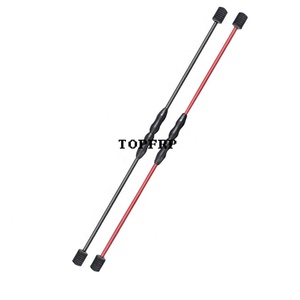
Detachable Neural Feedback Tremor Training Bar
Engineered with high-frequency dynamic dynamic inertia sensing, providing real-time biomechanical resistance for neuromuscular retraining and kinetic stabilizer therapy.
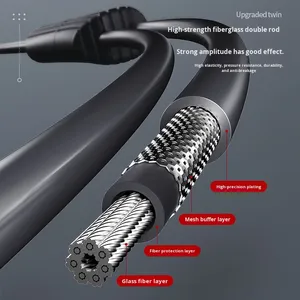
Felix Adjustable Elastic Tremor Modulation Rod
Constructed from high-tensile medical-grade PP polymers with targeted resonance harmonic dampening for customized physical therapy and neuromuscular conditioning.
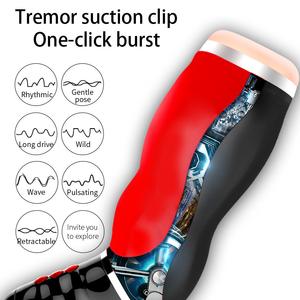
Micro-Pulse Acoustic & Tremor Stimulation Clip
Integrated one-click high-frequency pulse generator featuring thermal regulation for localized nerve pathway stimulation and somatosensory research applications.
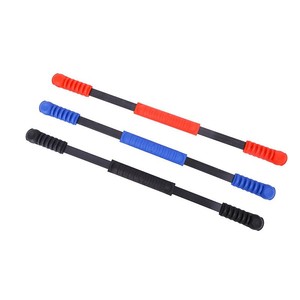
High-Frequency Flexi-Swing Tremor Suppression Bar
Designed for upper extremity neuromuscular dynamic stabilizing training, utilizing controlled oscillation wave profiles to assist motor impairment recovery.
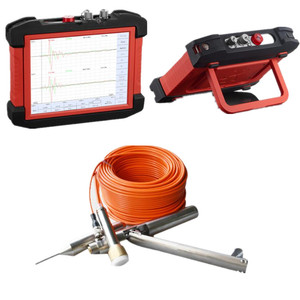
Micro-Tremor Precision Signal Diagnostics Controller
Ultra-sensitive multi-channel micro-tremor acquisition controller providing sub-milligram acceleration telemetry, shear wave measurement, and FFT spectral profiling.
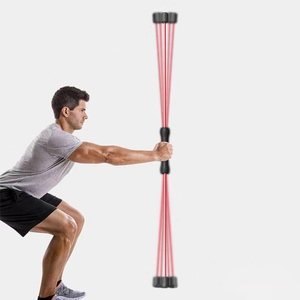
High-Frequency Ergonomic Rubber Tremor Stabilizer Rod
Constructed with high-density synthetic elastomeric dampeners for core dynamic proprioception training and long-term neuro-muscular resistance therapies.
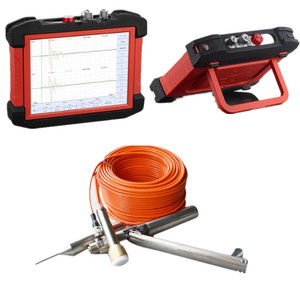
Shear Wave Velocity & Micro-Tremor Cycle Test Instrument
High-speed digital signal processor unit configured for precise cyclic wave propagation analysis, micro-vibration calibration, and structural tremor logging.
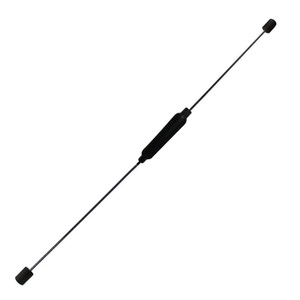
Modular Elastic Tremor Suppression Training Felix Stick
Features quick-release locking joints and dual-end counterweights for custom tactile biofeedback and muscular reflex loop stimulation protocols.
Enterprise Excellence & Industrial Manufacturing Capacity
Over two decades of pioneer research in neural engineering, biosignal decoding algorithms, and certified ISO 13485 manufacturing standards for global export distribution.
Industrial Whitepaper: Next-Generation Closed-Loop Neural Signal Controllers
A technical guide on non-invasive neuromodulation architectures, edge signal processing, and CE-compliant manufacturing for international biomedical buyers.
1. The Paradigm Shift: From Open-Loop Stimulation to Adaptive AI Neuromodulation
Traditional neuromuscular stimulators rely on static, predetermined waveform patterns that fail to account for physiological fluctuations, muscle fatigue, or varying tremor amplitudes. Modern neural controller manufacturing has shifted toward closed-loop peripheral nerve stimulation (PNS). By integrating multi-channel electromyographic (sEMG) bio-sensors with real-time digital signal processing (DSP), next-generation controllers continuously decode neural motor intent, filter motion artifacts, and deliver dynamically modulated electrical or mechanical impulses targeted specifically at pathological tremor frequencies (typically 4Hz – 12Hz).
2. Architecture of a CE-Certified Neural Controller System
Achieving European Conformity (CE Mark) under the updated Medical Device Regulation (MDR 2017/745) requires rigorous hardware redundancy and ultra-low noise signal acquisition. A high-performance neural control motherboard incorporates:
- Analog Front End (AFE): High-CMRR (>110dB) biopotential amplifiers capable of resolving microvolt-level nerve signals amidst heavy ambient electromagnetic interference.
- Edge AI Microcontroller: Low-power ARM Cortex-M4 or RISC-V cores executing real-time fast Fourier transform (FFT) algorithms and neural neural network inference for gesture decoding.
- Galvanic Isolation & Pulse Driver: Certified medical-grade optical or capacitive isolators ensuring patient safety with dual-phase charge-balanced constant current output stages.
Technical Specification Matrix: Controller Generations
| Feature Parameter | Legacy Open-Loop Controllers | 2nd Gen DSP Controllers | Our 3rd Gen Neuro-AI Controllers |
|---|---|---|---|
| Signal Feedback Loop | None (Fixed Pulse) | Basic Threshold Sensing | Continuous Closed-Loop Real-Time AI |
| Sampling Frequency | < 1 kHz | 2 kHz – 5 kHz | Up to 20 kHz Multi-Channel sEMG |
| Latency Response | N/A | 50ms – 100ms | < 8ms Edge Processing Latency |
| Regulatory Standards | Basic CE EMC | CE MDD Class I/IIa | CE MDR 2017/745 & ISO 13485 Cleared |
| Cloud Connectivity | None | Offline Bluetooth Transfer | Encrypted IoT Telemetry & OTA AI Updates |
Global Procurement & Sourcing Trends in Neural Controllers
Key market drivers and regulatory evolution shaping B2B purchasing decisions for hospitals, medical device brand owners, and rehabilitation exporters.
1. Miniaturization & Wearable Integration
Global procurers are shifting away from bulky desktop stimulation units toward flexible, wrist-worn, or garment-integrated micro-controllers. OEM partners require surface-mount board designs that fit within ultra-compact watch-like enclosures without compromising thermal performance or battery longevity.
2. Strict CE MDR & Cyber Security Rigor
With the European Union enforcement of MDR rules, B2B importers prioritize suppliers that provide complete Technical Documentation Files (TDF), ISO 14971 Risk Management reports, and IEC 62304 software lifecycle compliance, eliminating customs registration bottlenecks.
3. Bio-Compatible Material Standards
Export markets demand non-cytotoxic, hypoallergenic materials (ISO 10993 compliant) for all patient-facing chassis, elastomeric straps, and dry biopotential electrode pads, ensuring safety during multi-hour continuous wear.
Why Choose Our Manufacturing & Export Infrastructure
Combining proprietary neural decoding algorithms with full-turnkey electronic assembly to deliver unrivaled OEM/ODM solutions.
Decades of Neural R&D
Our core engineering team originates from pioneering bioelectronic institutions, bringing 20+ years of cumulative specialized knowledge in motor disorder suppression, nerve-computer interfaces, and biomechanical feedback mechanisms.
Closed-Loop Bio-AI Algorithms
Our microcontrollers don't just output static pulses. They run cloud-trained neural models that adapt dynamically to patient fatigue, tremor frequency drift, and voluntary dynamic movement in sub-10ms intervals.
Full-Spectrum OEM/ODM Customization
From PCB layout, firmware flashing, and custom enclosure molding to medical-grade packaging and private labeling, we provide end-to-end hardware development for international distributors.
B2B Procurement & Engineering FAQ
Essential answers regarding CE certification, custom manufacturing, lead times, and signal controller integration.
What specific CE certifications do your neural controllers carry?
Our neural controllers and medical wearable components comply with the European Union Medical Device Regulation (EU MDR 2017/745), EN ISO 13485 quality management, IEC 60601-1 electrical safety standards, and IEC 60601-1-2 EMC testing. Complete CE Declaration of Conformity (DoC) and technical files are provided to authorized importers.
How does closed-loop tremor suppression differ from standard TENS or EMS units?
Standard TENS/EMS units deliver open-loop, continuous electrical pulses regardless of muscle state. Our closed-loop neural controllers continuously read sEMG and accelerometer data, isolate pathological tremor frequencies from deliberate voluntary motor movement, and only trigger calibrated counter-phase stimulation when active tremor is detected.
Can we customize the firmware or integrate our own neural signal processing algorithms?
Yes. We offer SDK/API access for enterprise clients, enabling software teams to load custom digital signal processing (DSP) filters, neural network weights, or custom stimulation pulse patterns onto our embedded ARM Cortex processor architecture.
What is the typical minimum order quantity (MOQ) and production lead time for export orders?
For standard CE-marked neural controller modules, our evaluation sample MOQ starts at 10 units. Custom OEM/ODM manufacturing batches typically start at 500 units, with production lead times ranging from 4 to 6 weeks, depending on component sourcing and custom housing tooling.
How do your micro-tremor monitoring devices handle electrical noise and artifacts?
Our hardware employs differential active biopotential inputs with ultra-high common-mode rejection ratios (CMRR > 110dB), hardware notch filters for 50Hz/60Hz mains power interference, and real-time digital biquad bandpass filters to isolate genuine physiological signal profiles.
Do you offer intellectual property (IP) protection agreements for proprietary custom hardware designs?
Absolutely. We execute non-disclosure agreements (NDAs) and custom engineering contracts prior to reviewing proprietary schematics or firmware code, ensuring full IP ownership protection for our international brand partners.
Partner with a Leading CE Certified Neural Controller Manufacturer
Discuss your custom hardware requirements, request technical specifications, or request factory-direct export pricing with our bio-engineering sales directors today.