
Neurology
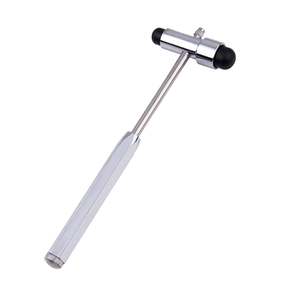
Diagnostics • Ref: NX-101
Latest news, clinical updates, and technical articles on bioelectronic technology and essential tremor solutions.
Engineered for high-volume institutional procurement, hospital systems, and global medical device distribution partners requiring validated sensory performance.
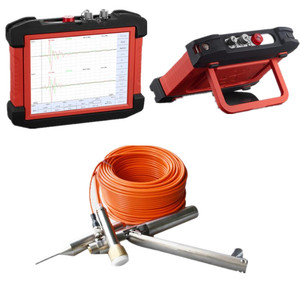
Modern bioelectronic medicine requires transitioning from static electrical pulses to bidirectional closed-loop nerve-computer interfaces (NCIs) that sense, decode, and modulate autonomic pathways dynamically.
Traditional neural devices deliver uncalibrated stimulation without understanding biological feedback. Our architecture leverages multi-channel biosignal arrays positioned over radial, median, and ulnar trunks. Proprietary FIR-filtering isolates sub-harmonic kinetic micro-tremors (4–8 Hz) from voluntary action potentials and electromagnetic artifacts in under 6 milliseconds.
The system utilizes ultra-low-power ASICs running quantized edge convolutional neural models (CNNs) trained on millions of electromyographic and mechanomyographic epochs. By identifying distinct temporal phase transitions prior to tremor amplification, the device prepares phase-shifted neutralizing waveforms customized to the patient's immediate neuromuscular state.
Targeted transcutaneous electrostimulation delivers biphasic, charge-balanced bursts directly to peripheral nerve bundles. This selectively disrupts synchronous central oscillatory bursting in thalamocortical networks through the ascending spinocerebellar tract, delivering continuous relief without surgical implants, burr-hole craniotomies, or medication-induced side effects.
A macroeconomic and regulatory breakdown for institutional buyers, hospital syndicates, and distributors navigating the evolving landscape of noninvasive medical devices.
Global public healthcare systems and private payers are restricting reimbursement approvals for invasive Deep Brain Stimulation (DBS) and focused ultrasound ablation due to high upfront perioperative costs ($75,000–$120,000 per patient), surgical infection vectors, and long-term hardware lead migrations. Health technology assessment (HTA) boards are redirecting procurement budgets toward prescription wearable bioelectronic devices that offer comparable tremor suppression with zero surgical mortality and drastically reduced hospital stay liabilities.
Global procurement teams must enforce stringent regulatory vetting. Cross-border buyers are prioritizing manufacturers capable of demonstrating verifiable Technical Documentation under EU MDR Annex II/III and ISO 10993 biocompatibility testing. The emergence of Software-as-a-Medical-Device (SaMD) classifications for algorithmic stimulation controllers means OEM partners must maintain cybersecurity controls (IEC 81001-5-1) and full traceability of algorithmic training weights to clear national port-of-entry health inspections.
Procuring specialized bioelectronics from tier-1 Chinese manufacturers allows medical brands to scale from pilot prototyping to hundreds of thousands of commercial devices. Through domestic access to rare-earth micro-magnets, ultra-flexible polyimide electrode fabrication, and cleanroom micro-molding facilities, OEMs reduce bills of materials (BOM) by 40–55% compared to Western assembly lines while maintaining automated 100% inline functional testing for signal fidelity.
Leveraging 20+ years of neural engineering lineage to power world-class contract manufacturing and global export programs.
Our production campuses operate fully certified Class 10,000 and Class 100,000 cleanroom environments. Automated surface-mount technology (SMT) handles high-density micro-flex circuits, automated optical inspection (AOI), and laser micro-welding for invasive and noninvasive leads.
We provide full-lifecycle product development: from physical schematic layout, mechanical tooling, firmware integration, and Bluetooth Low Energy (BLE 5.3) telemetric transmission, up to custom cloud application pipelines and cloud AI model training.
We streamline international commercialization by issuing complete 510(k) premakret notification documentation, CE MDR technical files, biocompatibility reports (ISO 10993), electrical safety certificates (IEC 60601-1, IEC 60601-1-2), and customs brokerage clearing.
Clear, direct answers regarding certifications, minimum order quantities (MOQs), customization timelines, and clinical trial compliance.
All facilities are audited and certified under ISO 13485:2016 for medical device design and manufacturing. Depending on the product line, products carry CE markings under EU MDR (Regulation 2017/745) Class I, IIa, or IIb, alongside FDA 510(k) clearances or Class I exemptions. Full factory acceptance testing (FAT) records, material certificates, and IEC 60601-1 4th Edition test reports are provided with commercial shipments.
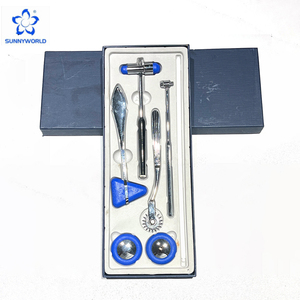
For standard institutional devices under existing tooling (e.g., diagnostic sets, reflex testing probes, standard electrodes), MOQs start at 500 to 1,000 units with typical turnaround times of 15 to 25 business days. For full custom OEM/ODM projects (custom ASIC housing, bespoke firmware, branded packaging), MOQs typically begin at 2,000 units with an 8-to-12-week tooling and validation cycle.
Yes. Our dedicated embedded software team can flash customized pulse-frequency profiles, define specific closed-loop sensor-polling rates, and integrate custom communication SDKs for iOS and Android healthcare platforms. We support encrypted BLE, Wi-Fi, and proprietary sub-GHz RF protocols compliant with HIPAA and GDPR data governance standards.
Every polymer, hydrogel, and metallic surface intended for patient skin contact undergoes strict testing in accredited third-party laboratories according to ISO 10993 standards. This includes ISO 10993-5 (in vitro cytotoxicity), ISO 10993-10 (tests for irritation and skin sensitization), and ISO 10993-23 for transdermal safety.
Institutional procurement officers and distributors can immediately request evaluation samples by clicking the contact link below. Our regulatory and engineering sales team will review your market requirements, provide non-disclosure agreements (NDAs), issue technical datasheets, and prepare formal commercial quotes within 24 business hours.
Connect directly with our senior clinical engineering and export logistics directors. Receive comprehensive technical specifications, institutional price decks, and sample dispatch schedules.
Contact Us