
Precision OEM Neuromuscular & Kinetic Devices
Customizable, enterprise-grade hardware tailored for neuro-rehabilitation, biomechanical assessment, and adaptive peripheral neuromodulation.
Executive Summary: Engineering Next-Gen Neuromuscular Technology
The global healthcare, bioelectronic medicine, and medical rehabilitation sectors are undergoing a paradigm shift. Traditional fixed-dose, open-loop stimulation devices are rapidly being replaced by closed-loop, sensor-integrated, and cloud-connected Neuro-AI therapeutics. As a premier **custom OEM neuromuscular device manufacturer and supplier**, our enterprise bridges two decades of academic neural engineering research with commercial-scale ISO 13485 contract manufacturing.
Whether your strategic roadmap demands wearable noninvasive neuromodulation systems—such as our flagship work represented by the **Felix NeuroAI™ Wristband architecture**—or high-precision biomechanical micro-tremor monitoring devices, our contract manufacturing infrastructure delivers full-lifecycle development. We provide global medical device brands, hospital procurement networks, and venture-backed healthtech pioneers with scalable original equipment manufacturing (OEM) and original design manufacturing (ODM) capabilities.
By maintaining strict adherence to US FDA 21 CFR Part 820 quality system regulations and European Medical Device Regulation (EU MDR 2017/745) frameworks, our OEM process guarantees high biosignal decoding accuracy, biocompatible wearable ergonomics, robust hardware longevity, and seamless firmware-cloud integration.
Emerging Technology Trends in Neuromuscular OEM/ODM
Analyzing key advancements driving micro-electronics, neural signal processing, and material science in medical manufacturing.
Closed-Loop Neural Modulation
Moving beyond static pulse generators. Modern OEM platforms integrate surface Electromyography (sEMG) and inertial sensing to read nerve signatures continuously, dynamically tuning stimulation parameters in real time.
Edge AI & Neural Signal Decoding
Embedding lightweight machine learning algorithms directly on low-power ARM Cortex microcontrollers allows high-frequency tremor suppression algorithms to execute sub-millisecond responses directly at the peripheral wrist band.
Medical-Grade Biocompatible Polymers
Shift toward hypoallergenic, flexible PP-elastomers, liquid silicone rubber (LSR), and skin-friendly hydrogel conductive interfaces that maintain structural integrity during daily long-term wear and continuous dynamic movement.
Multi-Frequency Kinetic Oscillation
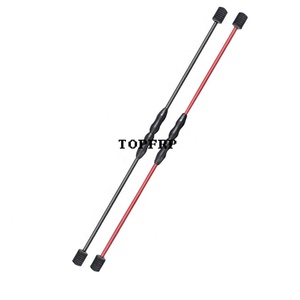
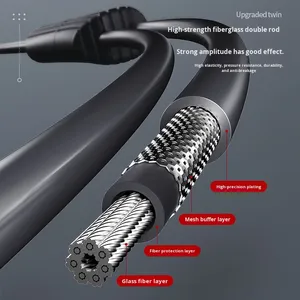
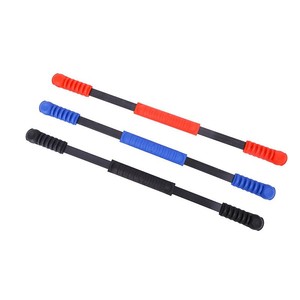
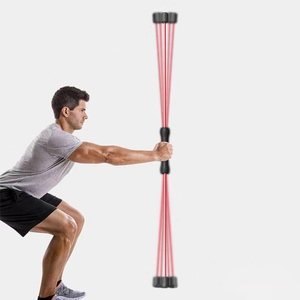
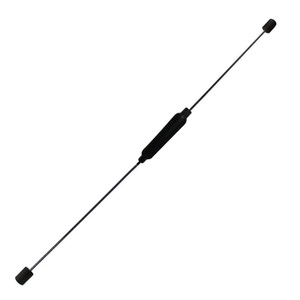
Integrating dual-action electromechanical vibration rods and shear-wave dynamic resonance tools to facilitate both micro-tremor therapeutic suppression and musculoskeletal rehabilitation exercise regimens.
Nerve-Computer Interface (NCI) Protocols
The convergence of peripheral nerve interfaces like Fasikl-X™ with cloud telemetry allows remote clinicians to evaluate essential tremor progression, motor intent patterns, and therapeutic adherence remotely.
Ultra-Low Power Consumption Architectures
Advancements in power management ICs (PMICs) and energy-efficient pulse stimulation circuits enable sleek, form-factor wrist wearables capable of multi-day operations on a single compact lithium-polymer battery charge.
Future Procurement Trends for B2B Medical Device Buyers (2026–2030)
Strategic procurement executives in healthcare conglomerates, medical distributor channels, and specialized neurology networks face evolving challenges. Sourcing neuromuscular hardware is no longer limited to unit cost evaluation; it requires auditing robust IP protection, firmware updateability, supply chain resiliency, and regulatory submission support.
| Procurement Dimension | Legacy Sourcing Paradigm | Future OEM/ODM Benchmark (2026+) | Strategic Value Impact |
|---|---|---|---|
| System Architecture | Open-loop, fixed-frequency pulse generators | Adaptive closed-loop Neuro-AI sEMG sensing + stimulation | Higher clinical efficacy & premium market pricing |
| Compliance Framework | Standard CE / ISO 9001 factory assembly | ISO 13485:2016, FDA 510(k) clearance readiness, IEC 60601-1-2 | Accelerated time-to-market; reduced regulatory liability |
| IP & Design Co-Development | Off-the-shelf white-label rebranding | Custom ASIC/PCB design, proprietary firmware & enclosure toolings | Defensible enterprise moat and high brand equity |
| Connectivity & Data | Standalone offline physical buttons | Encrypted Bluetooth 5.3, cloud telemetry APIs, OTA updates | Continuous clinical insights & recurring software value |
| Supply Chain Risk | Single-source component bottleneck | Dual-source component qualifying, localized BOM staging | Uninterrupted global product line supply chain execution |
Why Partner with Us for Custom OEM Neuromuscular Sourcing?
Leveraging deep neural science research, turnkey contract manufacturing, and strict quality engineering.
Full-Stack Engineering & Co-Development
From initial sensor electrode layout and micro-kinetic tuning to embedded C++ firmware and enclosure tooling, our engineers provide complete end-to-end OEM execution.
Rigorous Medical Quality Standards
Our ISO 13485 certified cleanrooms operate under strict quality management systems (QMS). Every manufactured unit undergoes automated optical inspection (AOI) and electrical safety testing.
Proven Neuromodulation Provenance
Grounded in 20+ years of neural engineering expertise. Our proprietary signal processing filters extract clean sEMG signals amidst high movement noise, providing optimal therapeutic performance.
Frequently Asked Questions for OEM Neuromuscular Procurement
Essential technical, regulatory, and commercial insights for B2B procurement managers and hardware product leads.
1. What customization options are available under your OEM/ODM neuromuscular manufacturing contracts?
We offer full hardware and software customization. This includes custom casing industrial design, ergonomic wrist/body band materials, customized sEMG/PNS electrode array layouts, bespoke PCB layout configuration, embedded stimulation signal waveforms, dynamic vibrational frequencies, custom branding/packaging, and dedicated mobile application SDK integrations.
2. How do your manufacturing processes support FDA clearance (510k) and EU MDR compliance?
As a medical device OEM manufacturer, we maintain full Device Master Records (DMR), Device History Records (DHR), Risk Management Files (ISO 14971), and biocompatibility testing protocol documentation (ISO 10993). We supply our B2B clients with complete technical files required for FDA 510(k) submissions, CE mark technical documentation, and regional health authority registrations.
3. What is the typical lead time from prototype design to mass production?
For standard white-label modifications of existing platforms, initial prototype samples are delivered within 4 to 6 weeks, with mass production scaling in 8 to 12 weeks. Fully customized ground-up ODM developments (custom ASIC, novel mechanical housings, specialized firmware) typically follow a 6 to 9 month pipeline spanning EVT (Engineering Validation Test), DVT (Design Validation Test), and PVT (Production Validation Test) stages.
4. How does your peripheral nerve stimulation technology differ from generic TENS devices?
Generic TENS units deliver broad, uncontrolled sensory nerve stimulation designed strictly for temporary localized pain relief. Our high-precision neuromuscular and closed-loop Neuro-AI architectures specifically target peripheral motor nerve pathways using calibrated stimulation bursts, precise frequency modulation, and micro-kinetic feedback designed for tremor suppression, neuro-rehabilitation, and motor-intent motion decoding.
5. What Minimum Order Quantities (MOQs) apply for custom OEM orders?
We provide flexible MOQ tiers structured to support both emerging clinical trial pilots and global healthcare distribution networks. Pilot production runs typically start at 500 units, while full custom mass manufacturing volume breaks occur at 2,000, 5,000, and 10,000+ units with scaled unit cost efficiencies.
6. How is Intellectual Property (IP) protected during joint technical development?
IP protection is fundamental to our enterprise model. We execute comprehensive Non-Disclosure Agreements (NDAs) prior to technical disclosure. All client-funded custom firmware modifications, proprietary enclosure designs, and specialized algorithms remain 100% exclusive client property under clear contractual IP transfer agreements.
Request Full OEM Engineering Catalog & Whitepaper Specifications
Connect directly with our senior neuro-technology engineering team and OEM procurement specialists to evaluate customized manufacturing solutions, BOM breakdowns, and sample availability.
Get Catalog